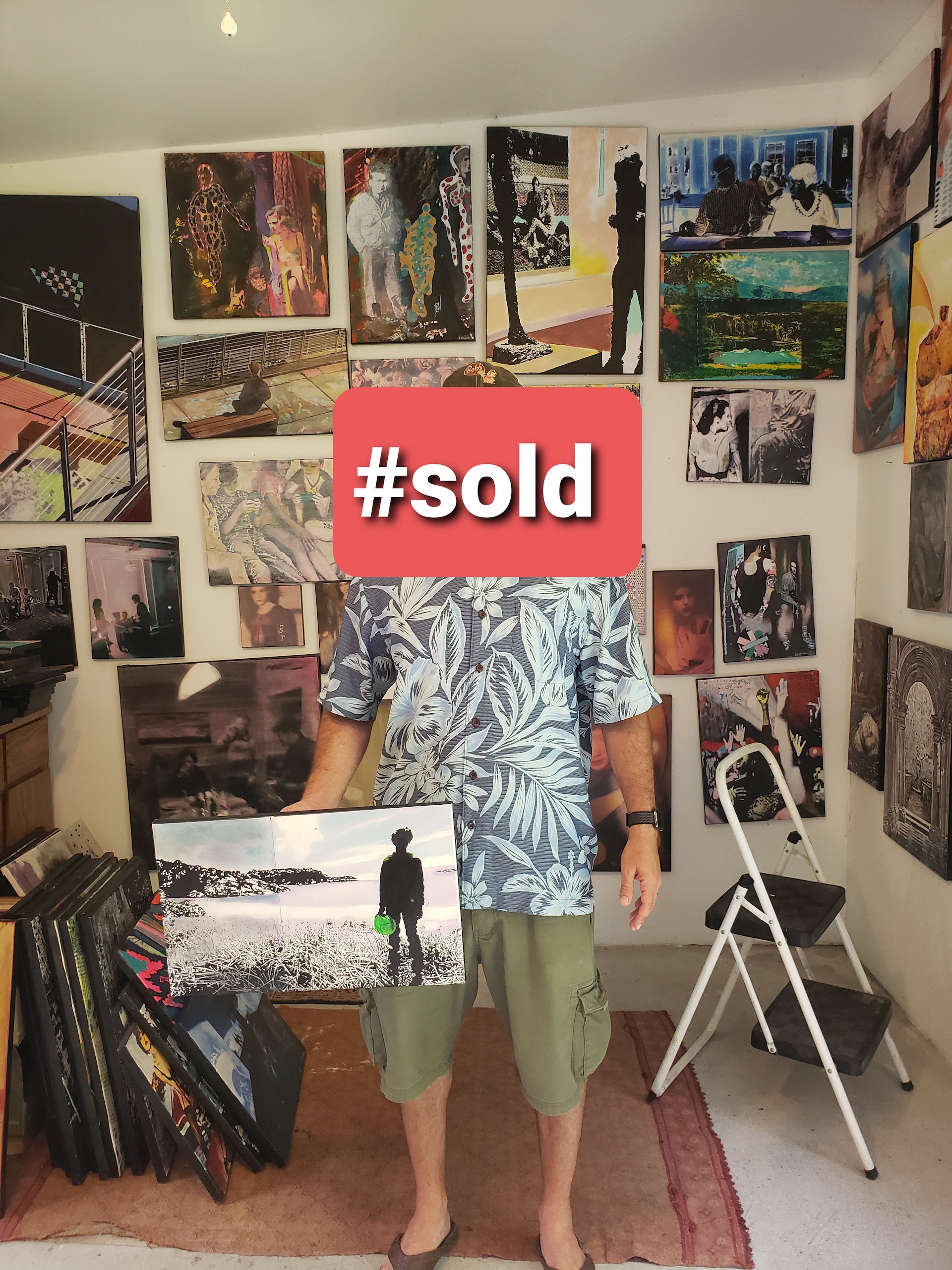
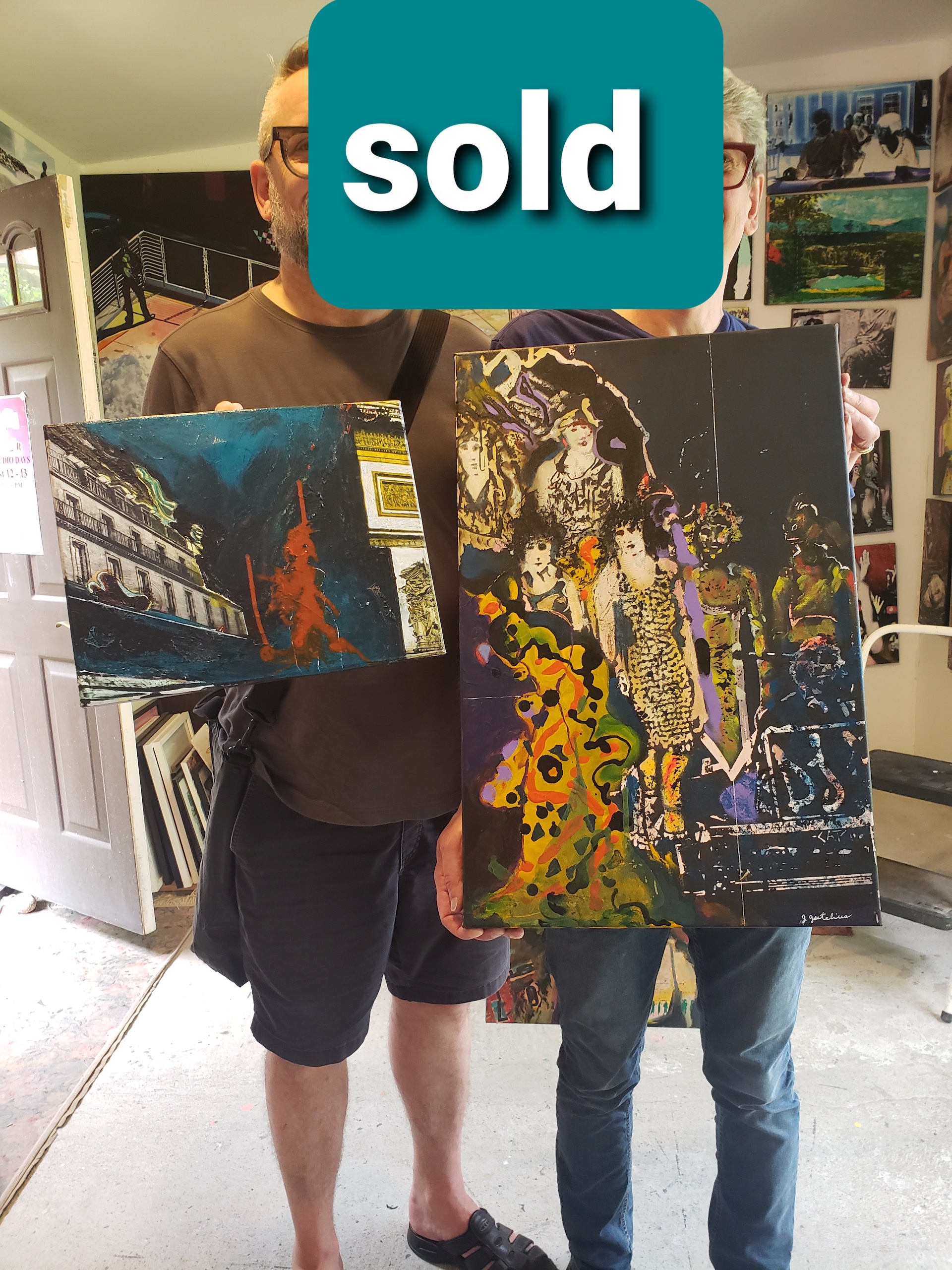
It’s always surprising who comes to visit my studio and buys one, two, or more paintings all at once. The most satisfying sales are of paintings I toiled over, off and on, through the years, adding images, rubbing out the images, piling on paint and scraping off the paint. (Paper towels and Isopropyl are a must.)
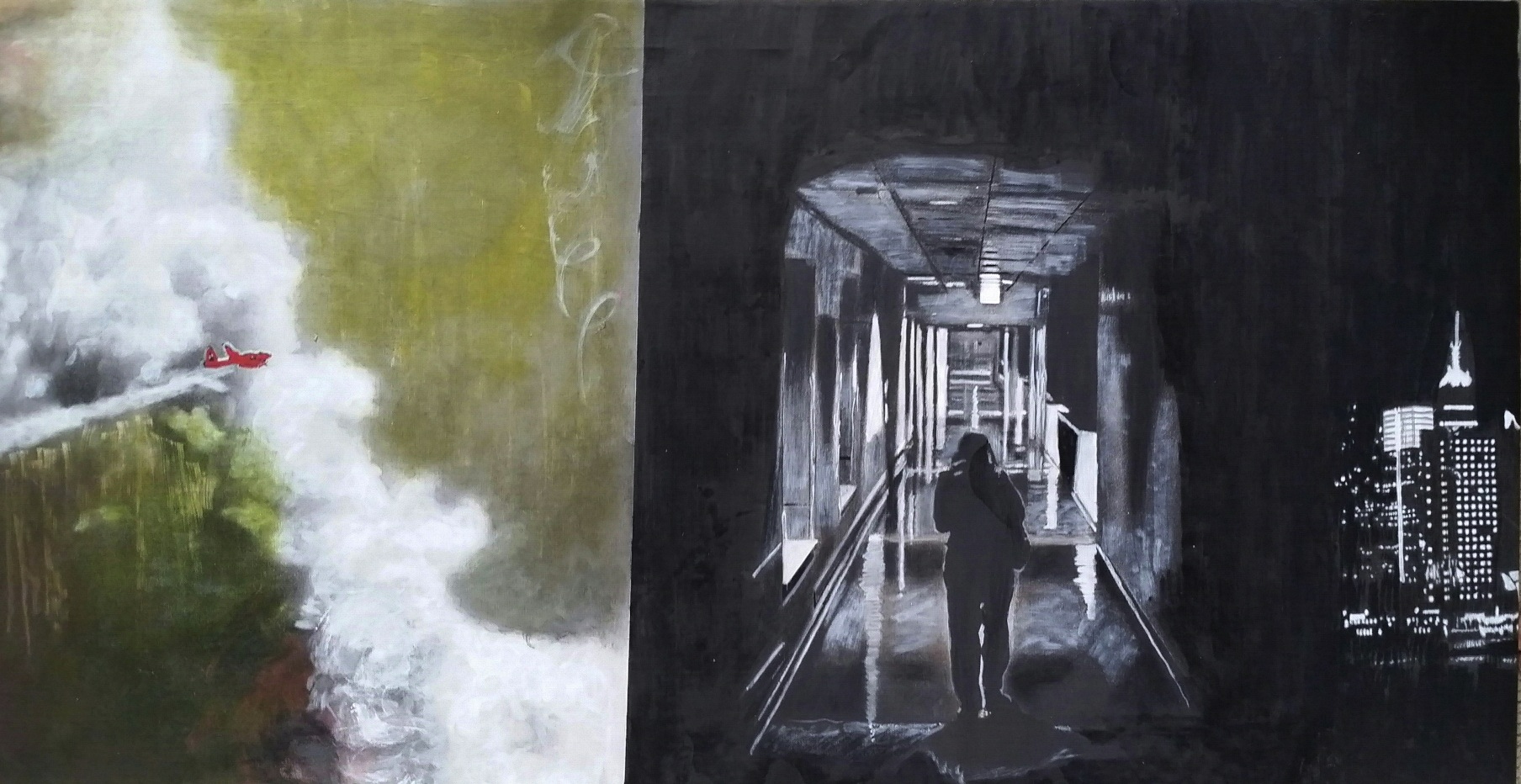
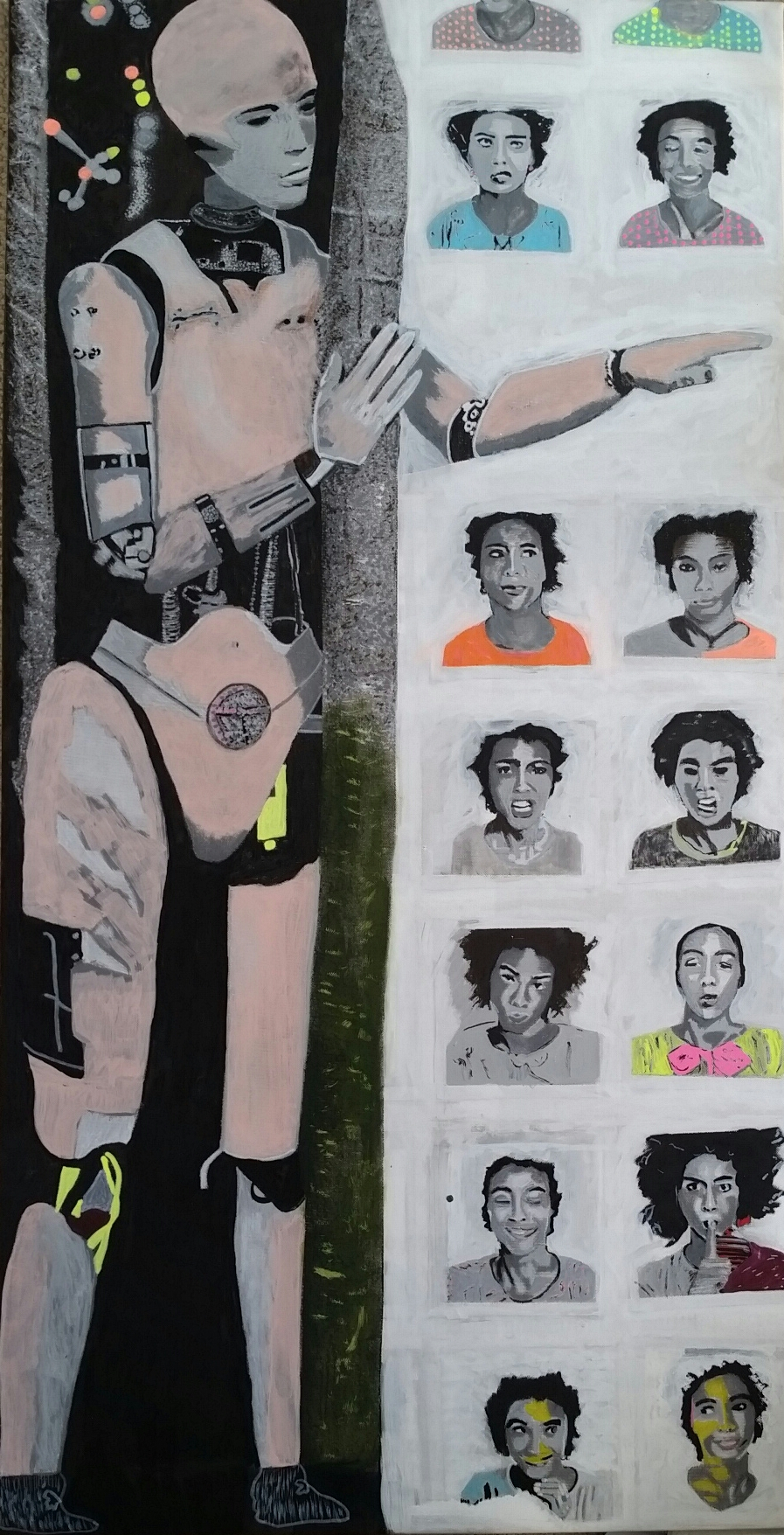
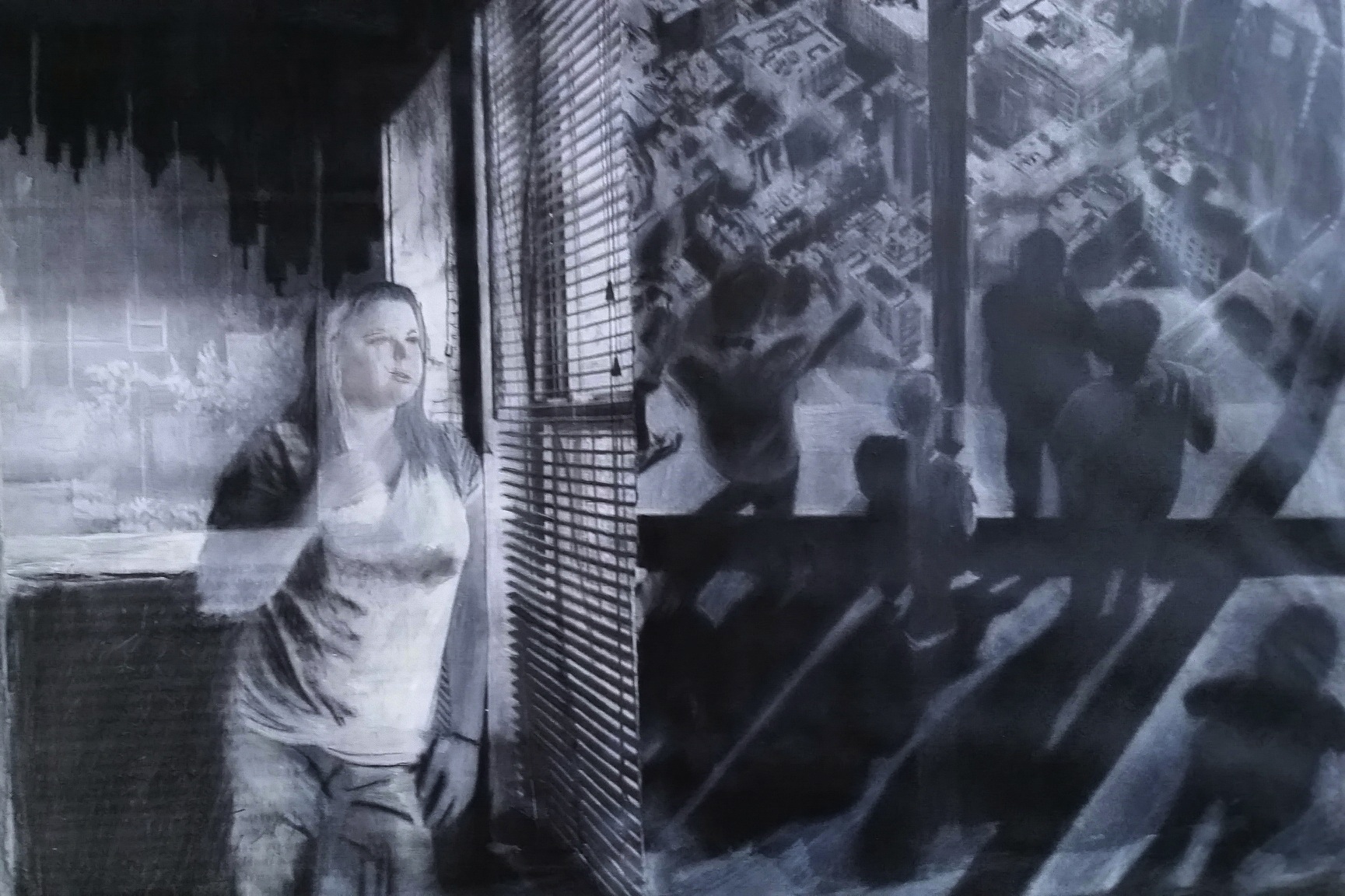
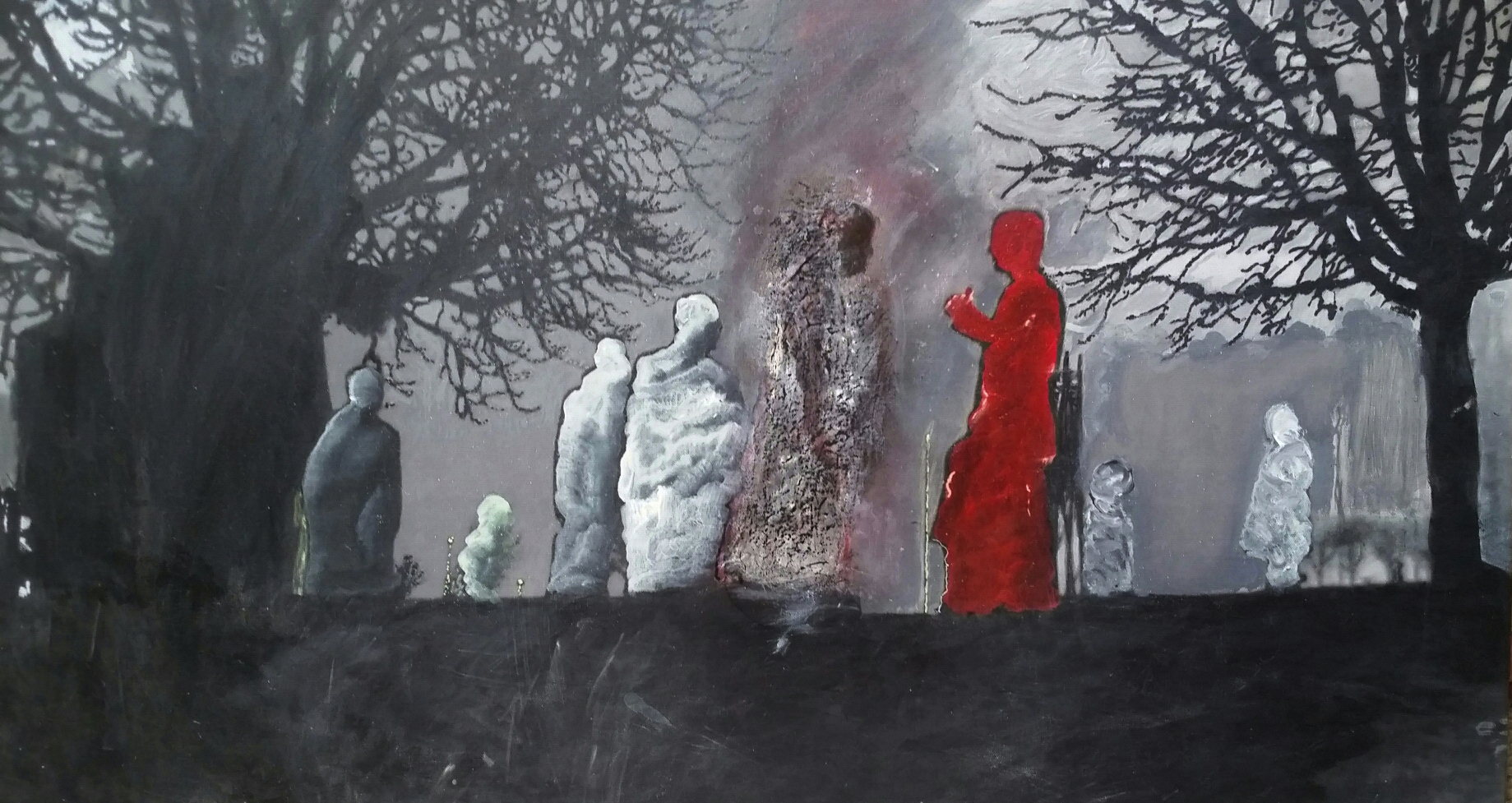
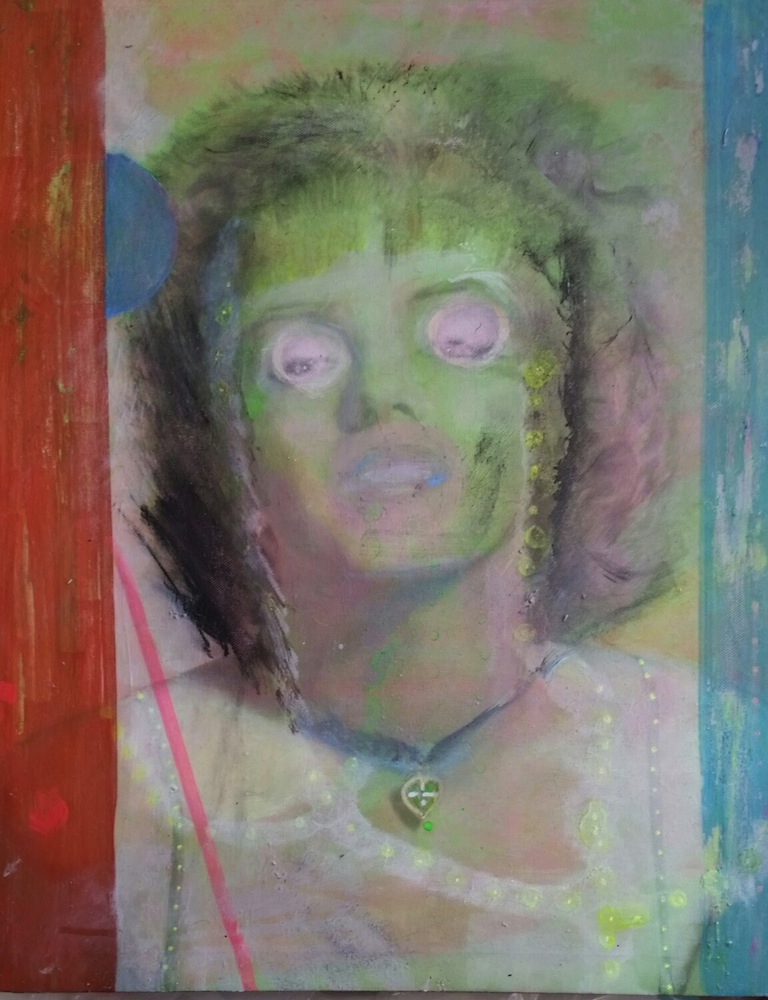
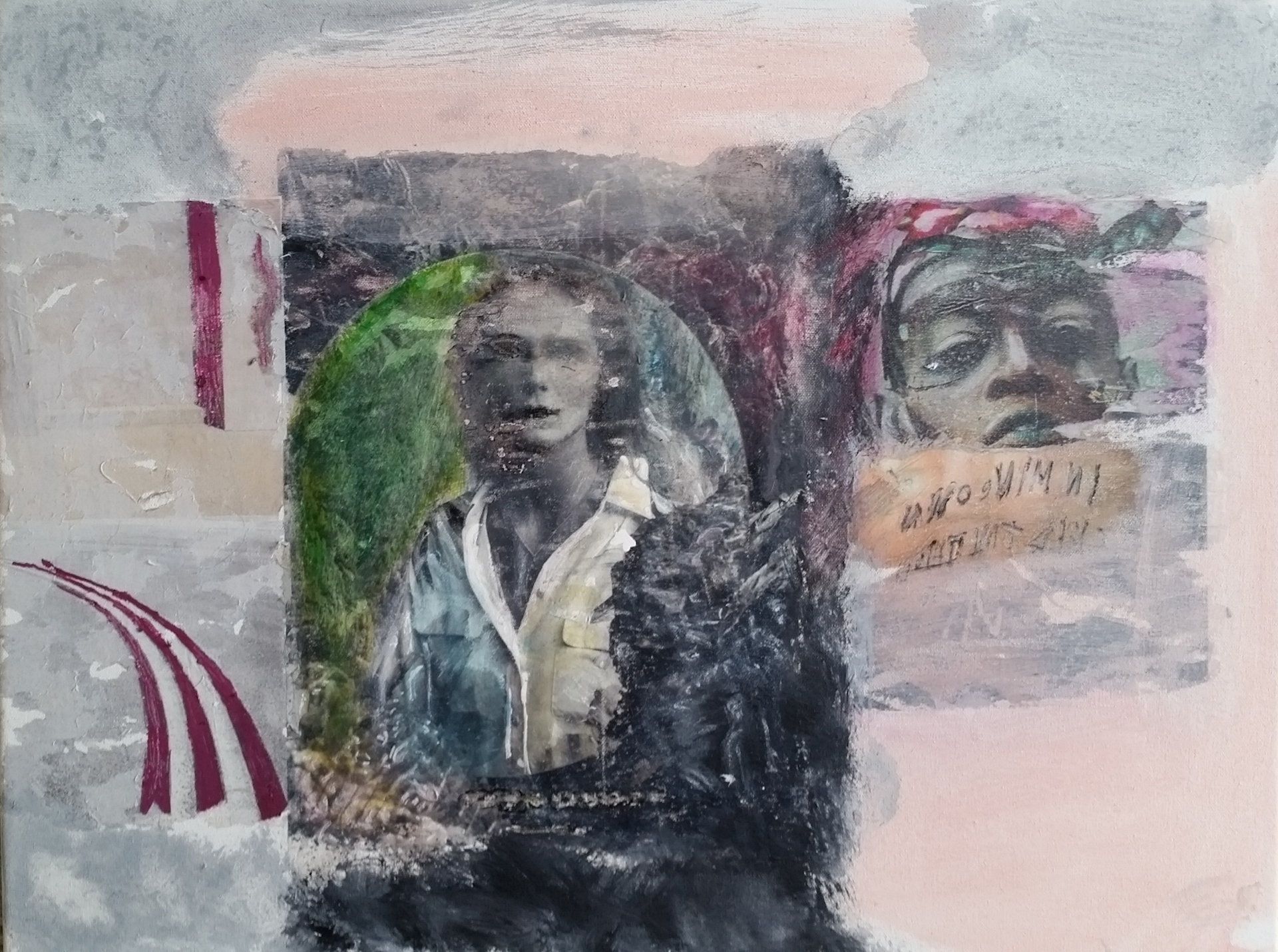
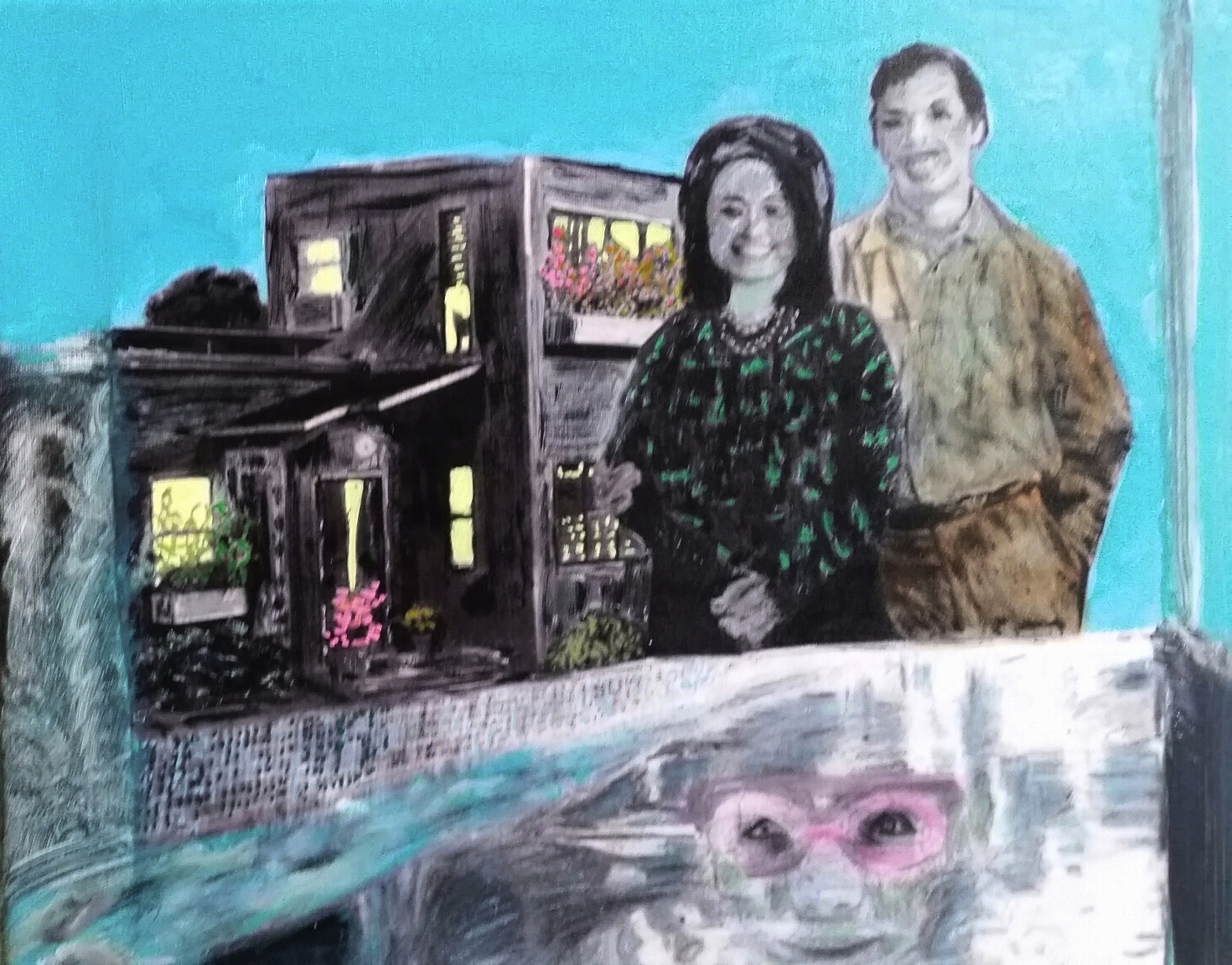
Then there are the intrepid explorers who venture out to my garden house and patiently pick through all the dozens of paintings I’ve stored there. A lot of those paintings I would call “iffy.” With numbers, scribbles, and secretive messages only a skilled detective can decipher. Thankfully, I’ve had many intrepid explorers coming this year. I’ve posted a few samples here.
And lastly, a journalist from the Daily Freeman happened by one morning, and here I am on the front page of that newspaper with my good friend Elizabeth Shafer (right). Elizabeth, a multitalented, multimedia artist extraordinaire.
One visitor to my studio remarked (or was it a complaint?) that I have “too many ideas” — I should stick to one idea and develop it. I got the same advice (or complaint) in art school. One of my art professors was a painter of directional signs. His work was shown in one of NYC’s best galleries. I recently looked him up online to see if, forty years later, he was still painting directional signs. Yes! There they were, painting after painting of arrows. Arrows pointing up, pointing crossways, pointing down, etc. So, he had a brand — to borrow from corporate marketing — easily identifiable, uniquely his. And me? Do I have a brand?
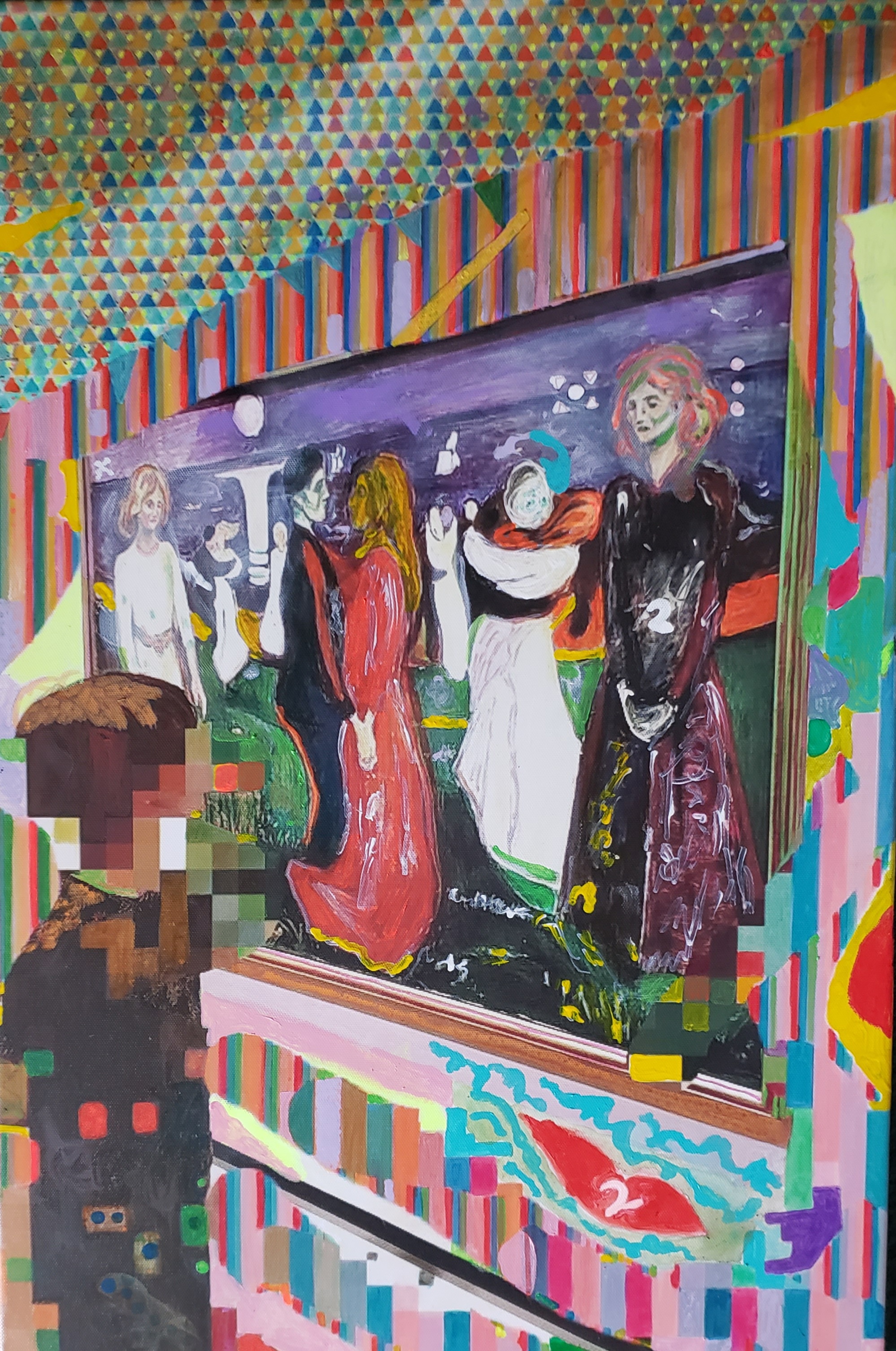
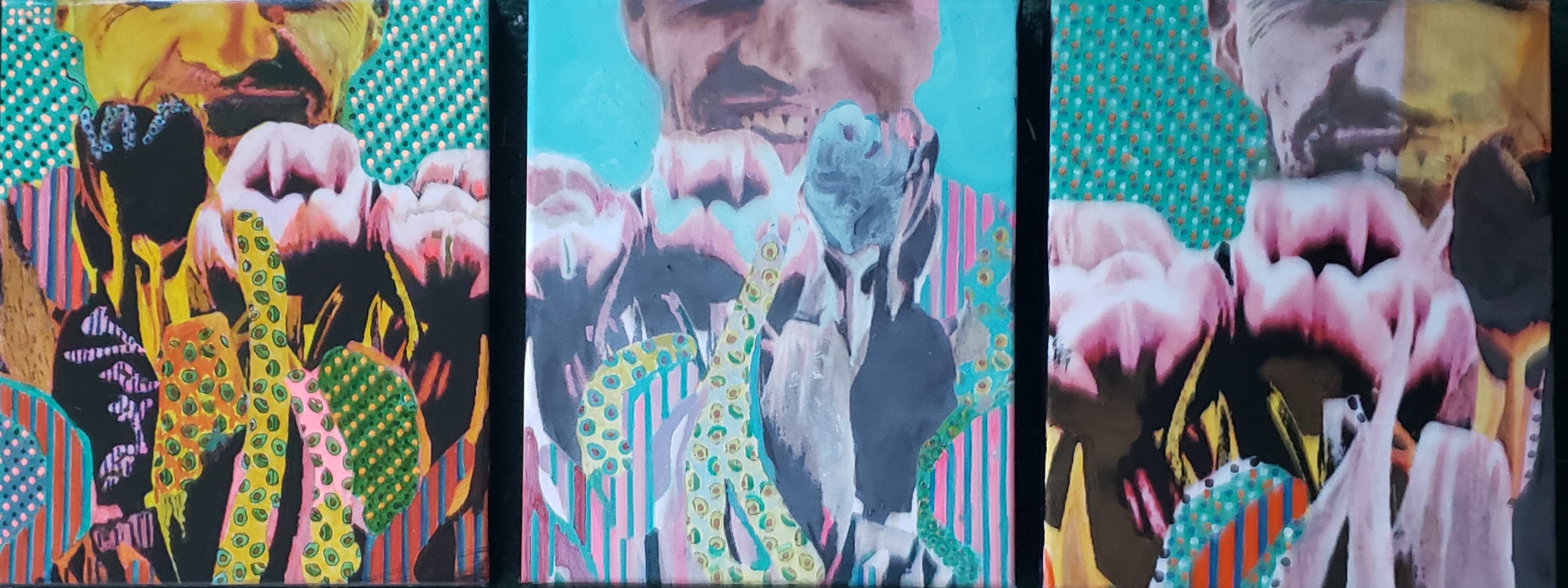
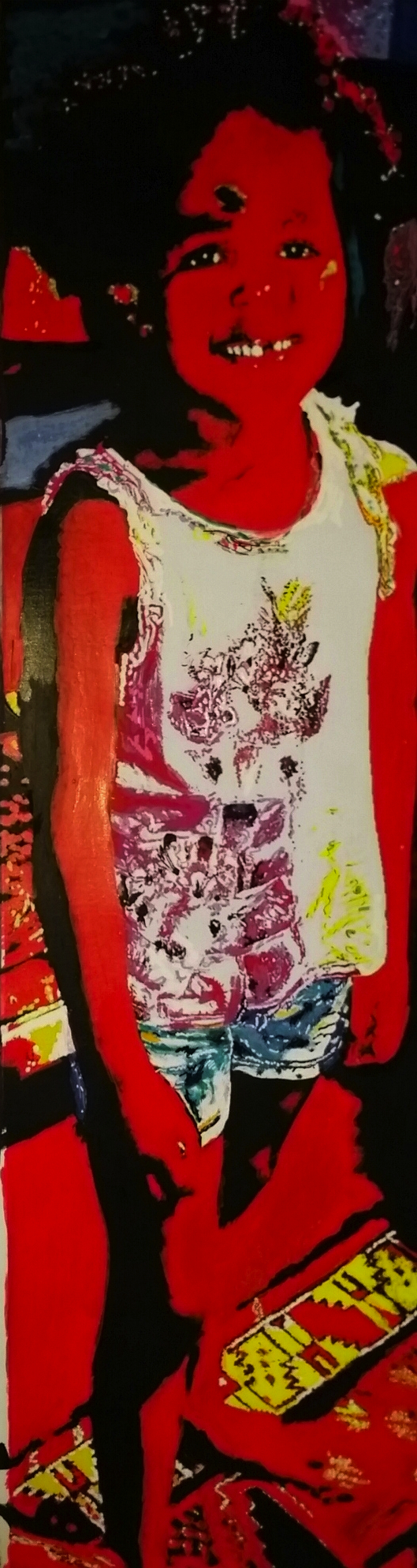
Child Looks at the Dance of Life (Munch) 16 x 24 inchesGive him flowers (studio view) each 10 x 12
Me? I start from the inside. I focus on whatever’s bothering me. Or what intrigues me. The past year, for example, I was faced with an upcoming court date and constant, nightmarish anxiety. How to alleviate my anxiety? I was tempted to throw paint against the canvas – expressionism!
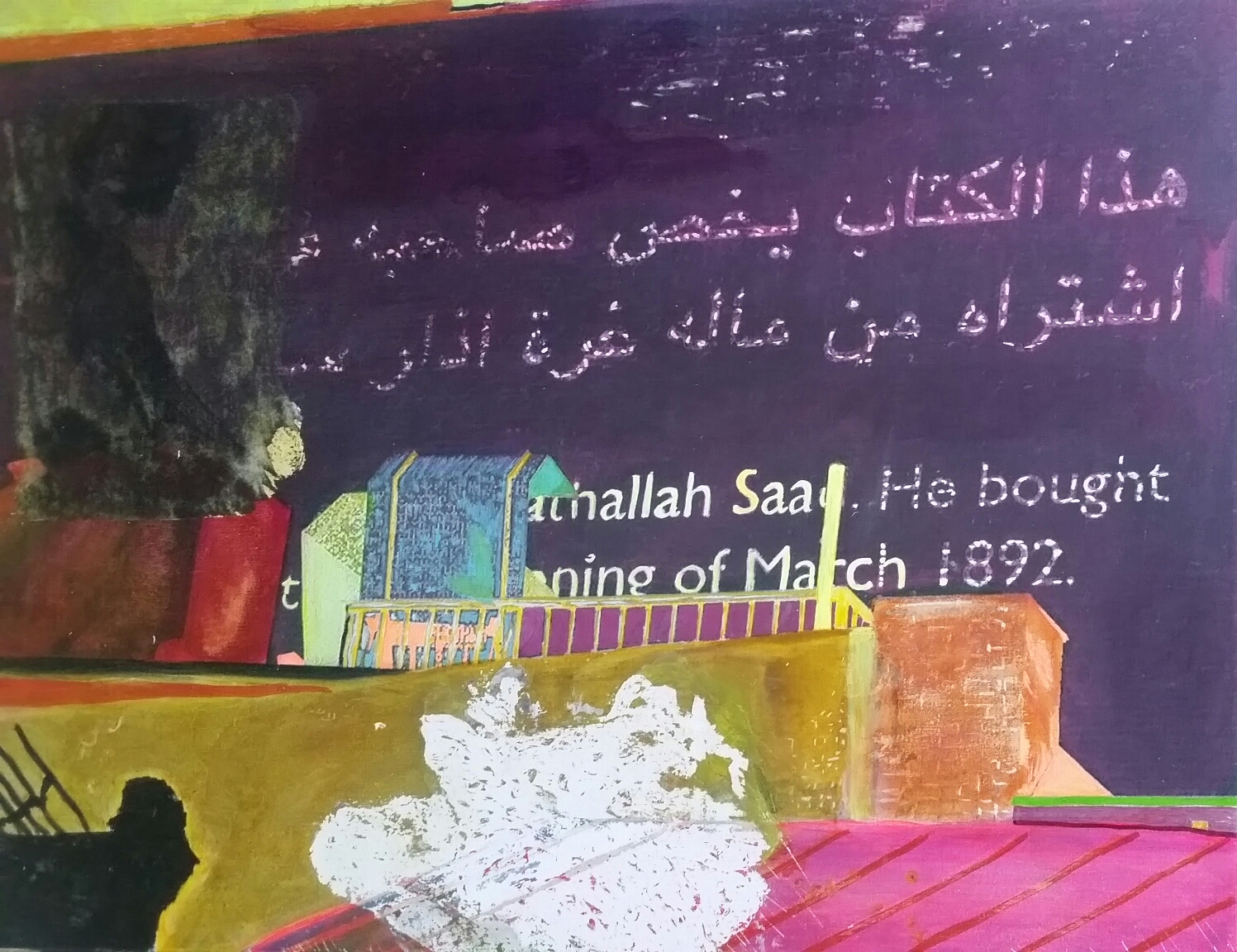
Instead, I discovered a simple therapy: I focused on details, tiny intricate shapes, dots, triangles, stripes, using my trusty ink pens and fluid acrylics and acrylic markers and occasional watercolor pencils. Will I go on “developing” my “patterned” paintings? Probably not.
Summer has come to the Hudson Valley and my hometown of Saugerties is celebrating the arts with a crazy amount of enthusiasm. Take a scenic drive to Saugerties, the “top ten coolest small towns in the U.S.,” according to Budget Travel Guide — and see:
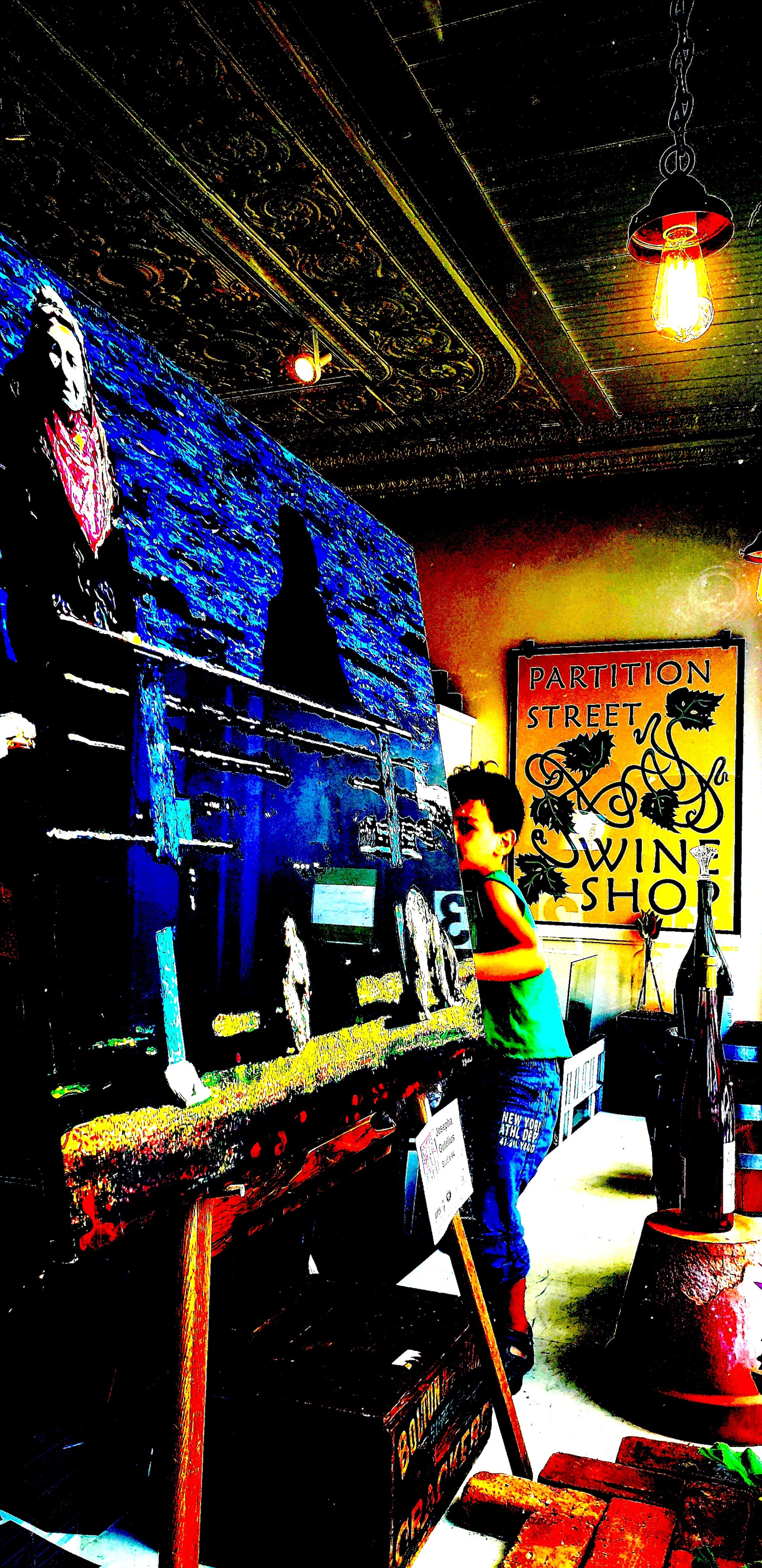
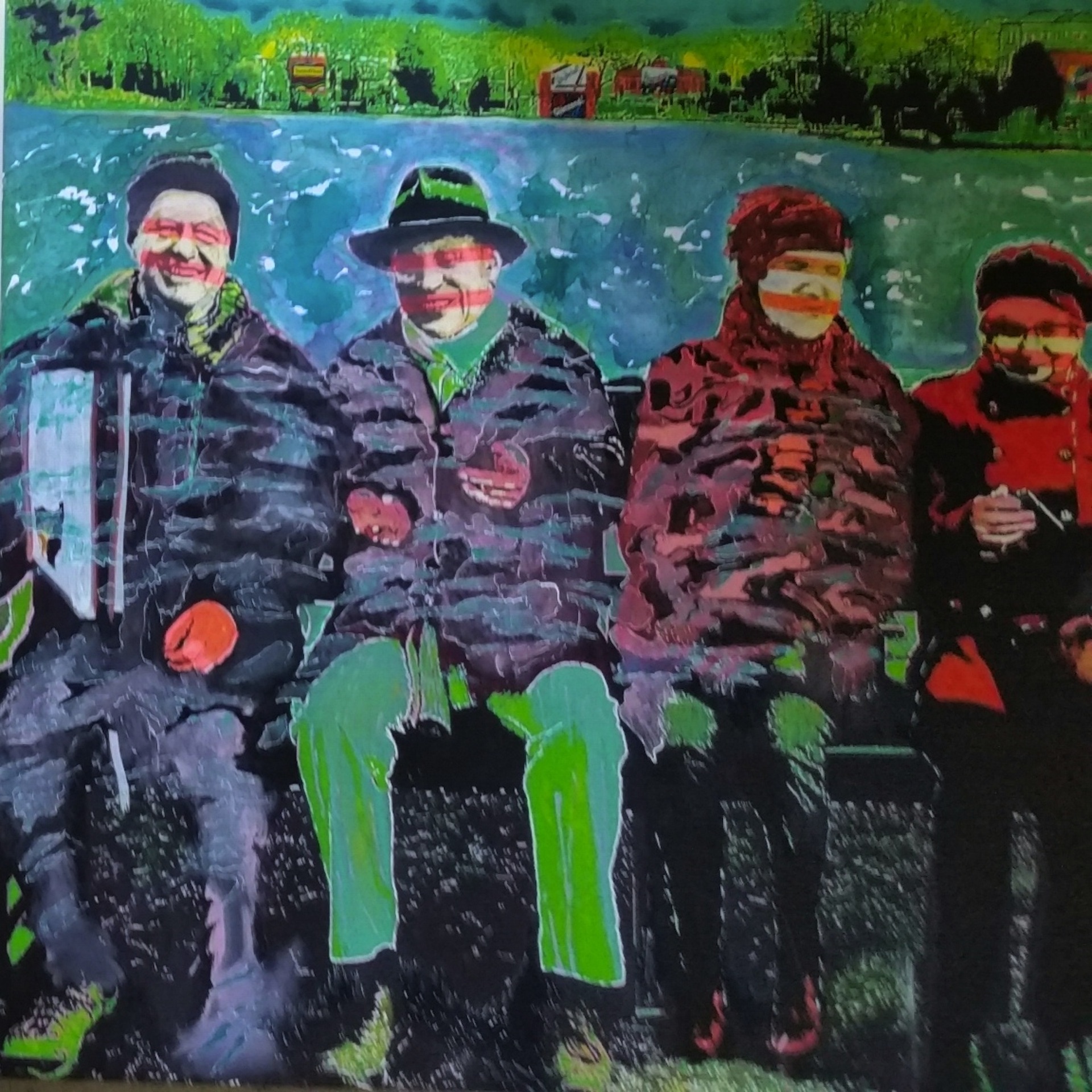
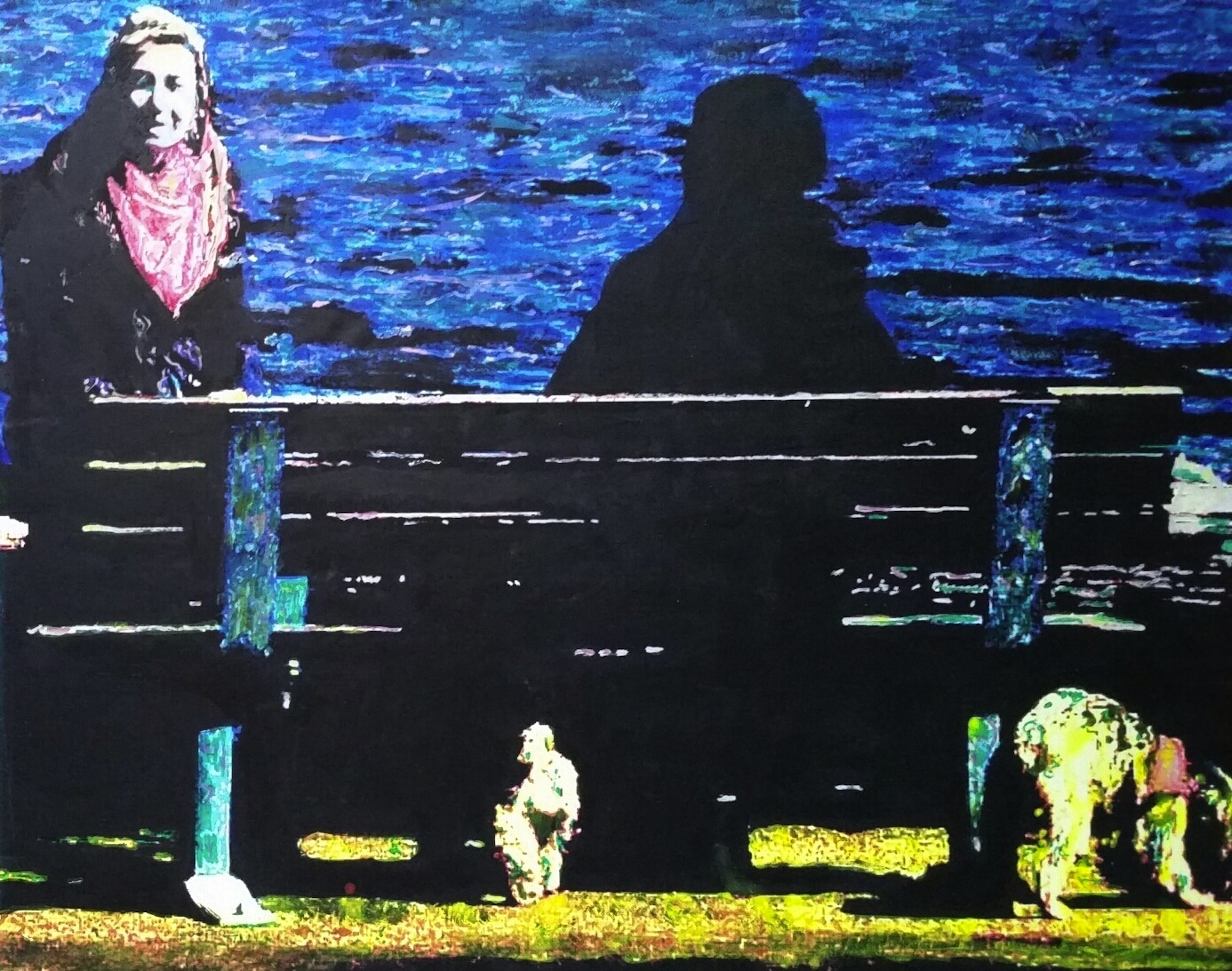
Sculptures on the sidewalks, paintings in the shop windows (Partition Street Wineshop is hosting one of my paintings — pictured below), a group show in the historic Dutch barn behind Kiersted House Historical Museum (my “Tudor” painting pictured below is included in the show), Saugerties Artists Tour (my studio is open to visitors August 11, 12), a kickoff to the Artists Tour at the magnificent Opus 40 Museum, plus, going into the fall, there’s “Saugerties is an Art Gallery” (a town-wide exhibition) and ShoutOut Saugerties in October… Yeah, Saugerties is very cool.
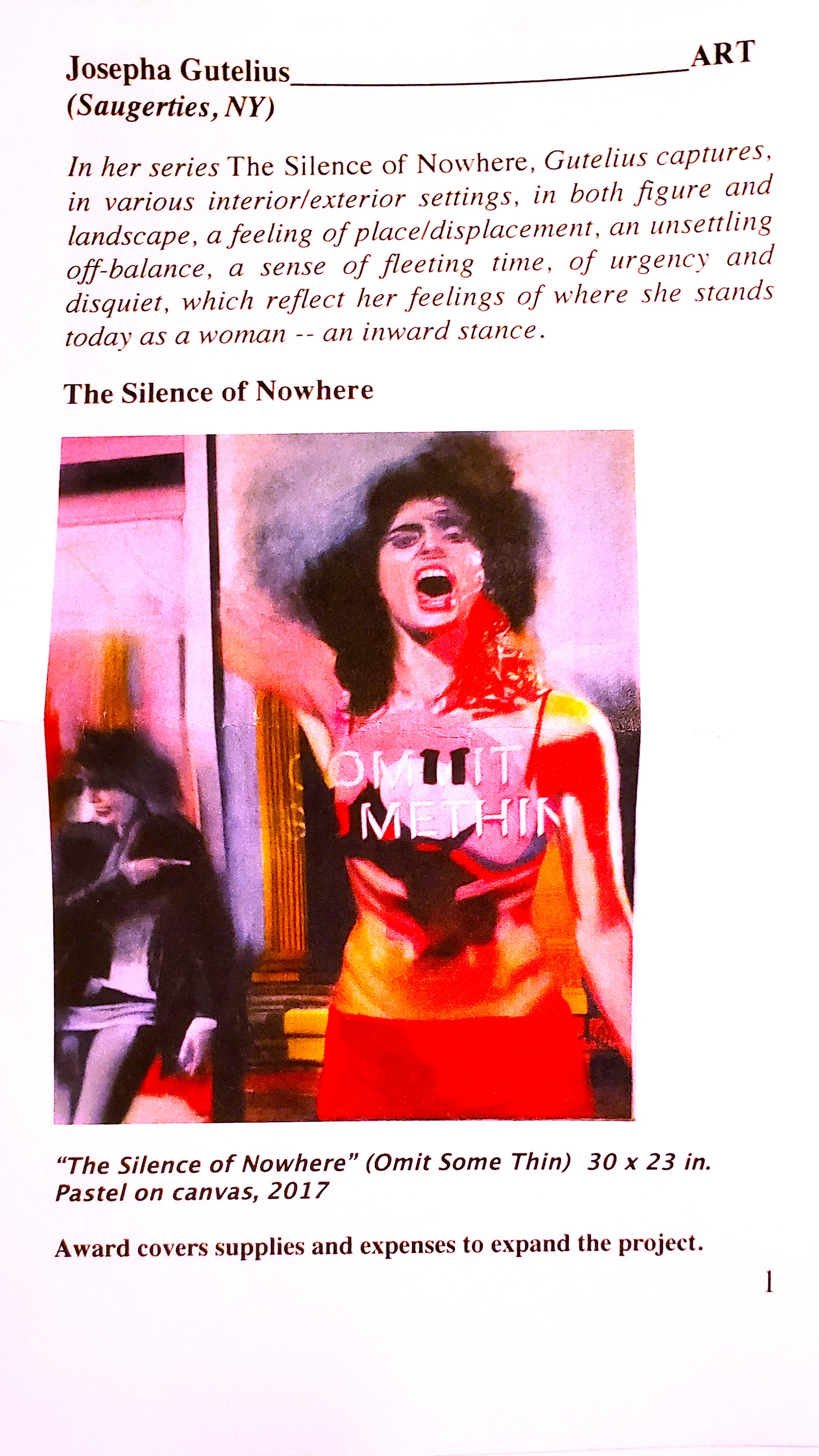
And I am deeply grateful for the honor of receiving a generous grant from the Barbara Deming Memorial Fund for my series “Silence of Nowhere.” The check arrived in July and the first thing I did was order 12 cans of spray varnish. Thank you, Barbara Deming (1917-1984) — a feminist, lesbian, poet, writer, and nonviolent activist in the civil rights, anti-war and women’s movements. In 1975, when she founded the Fund, she said, “In my life I’ve been helped as a writer to do my work. I think it’s fair that I try to help others.” (quoted from the Deming website)
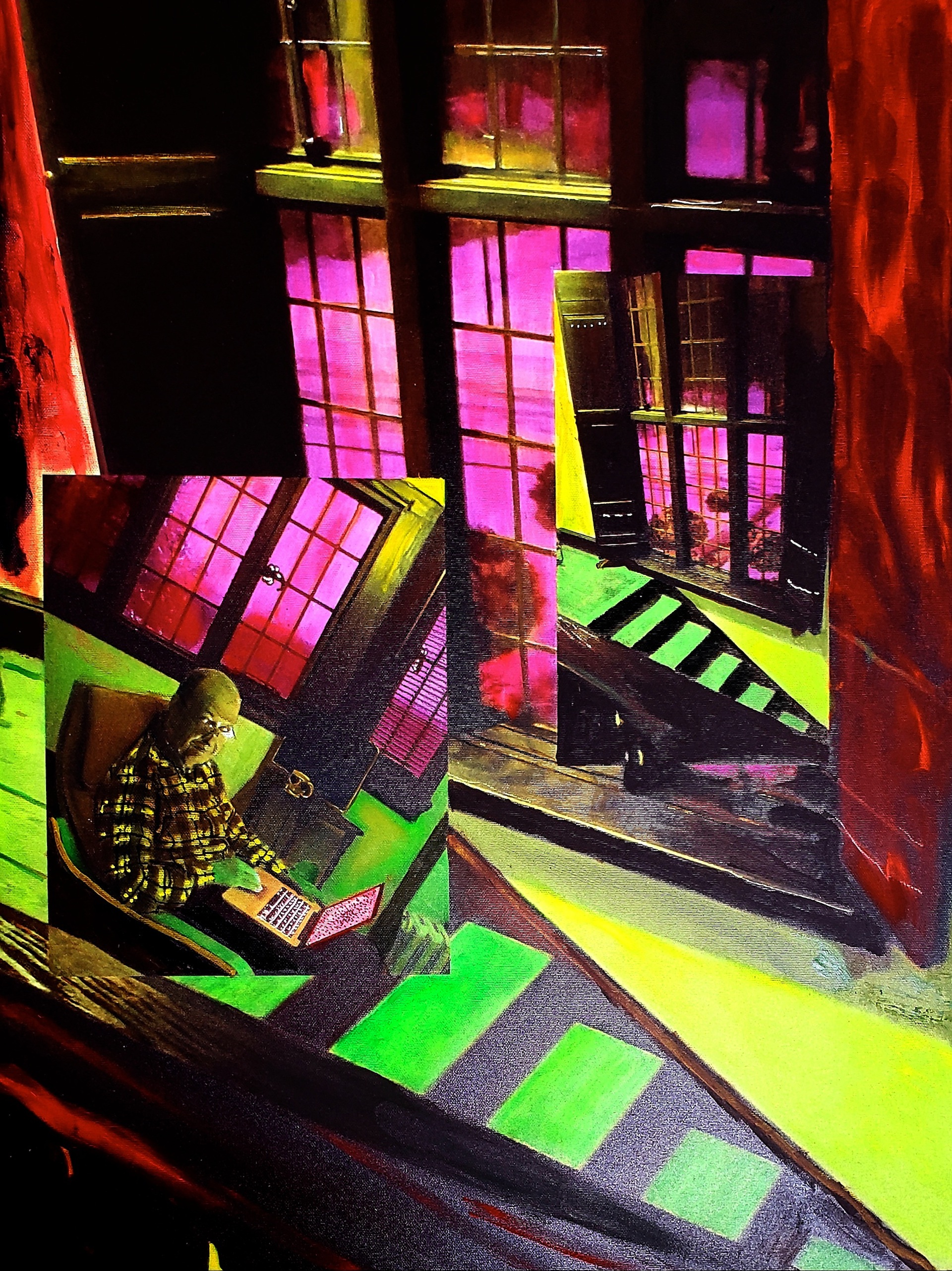
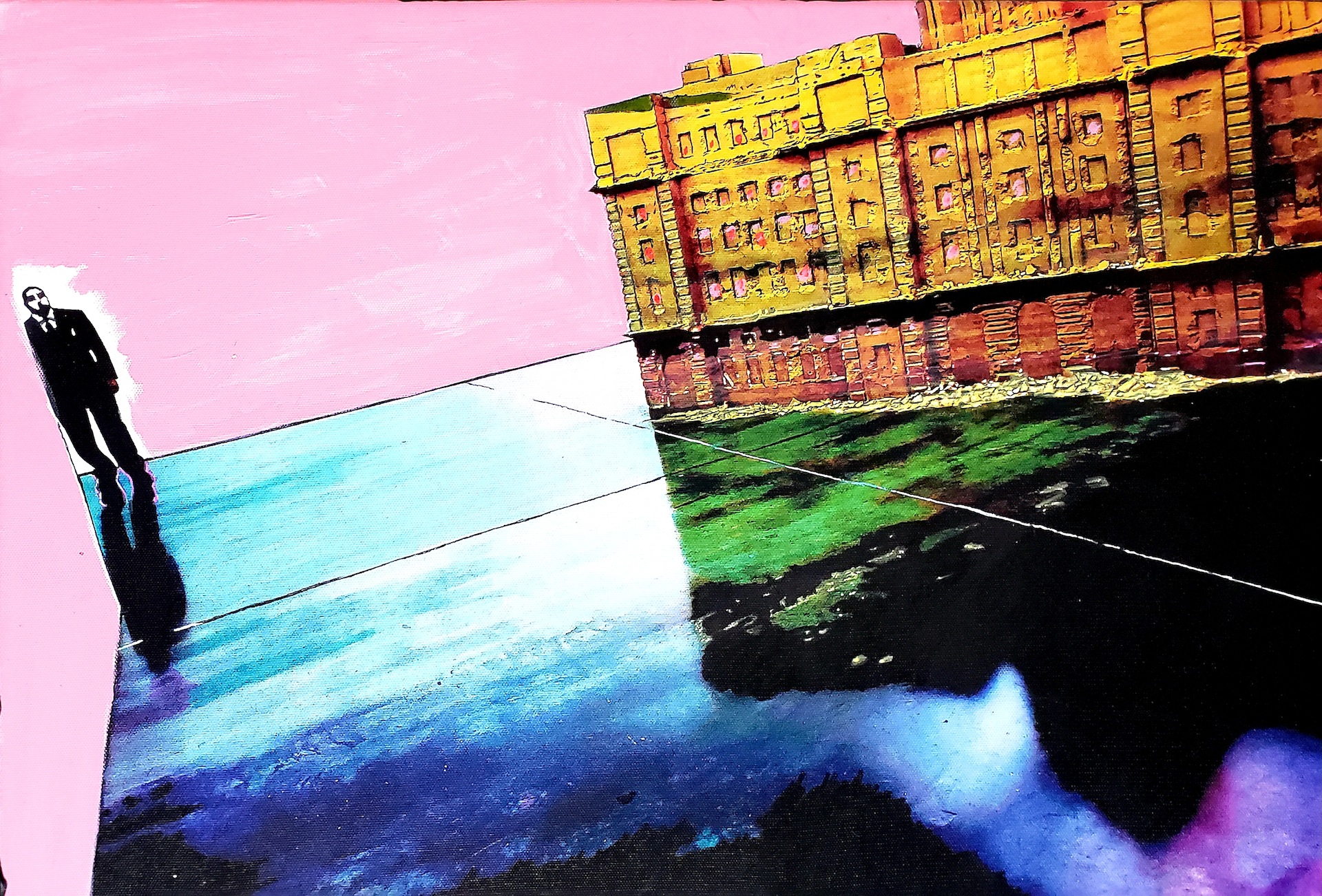
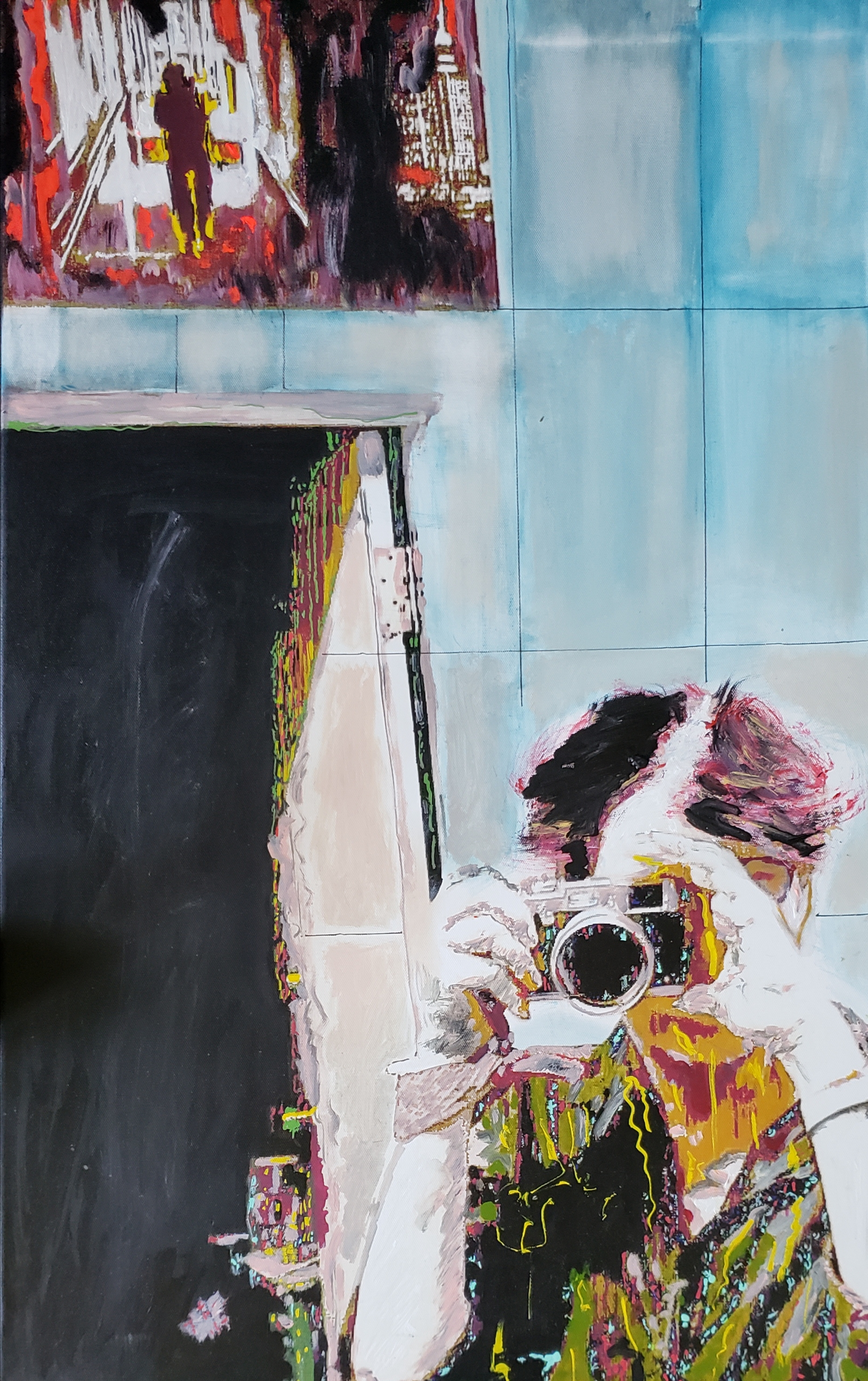
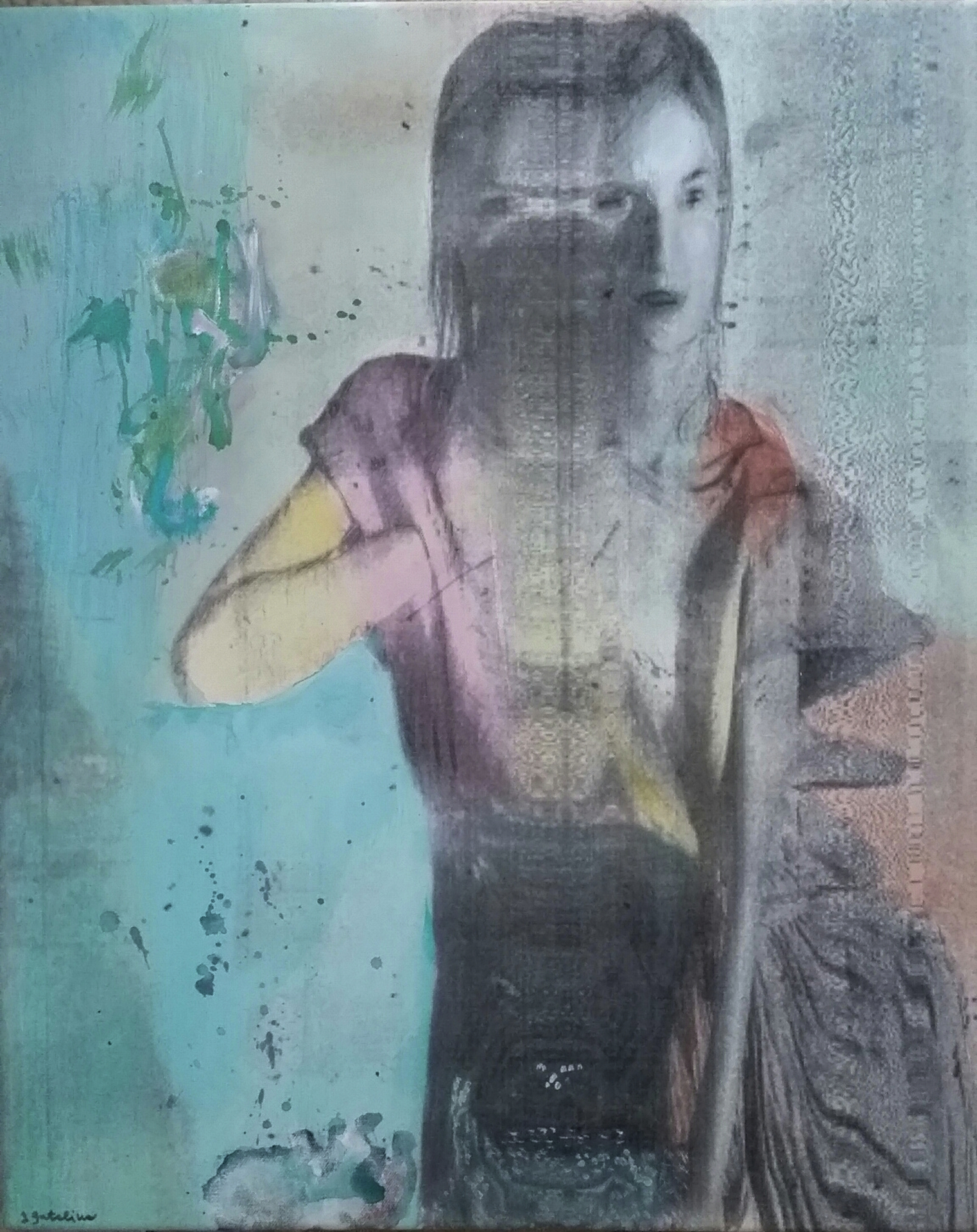
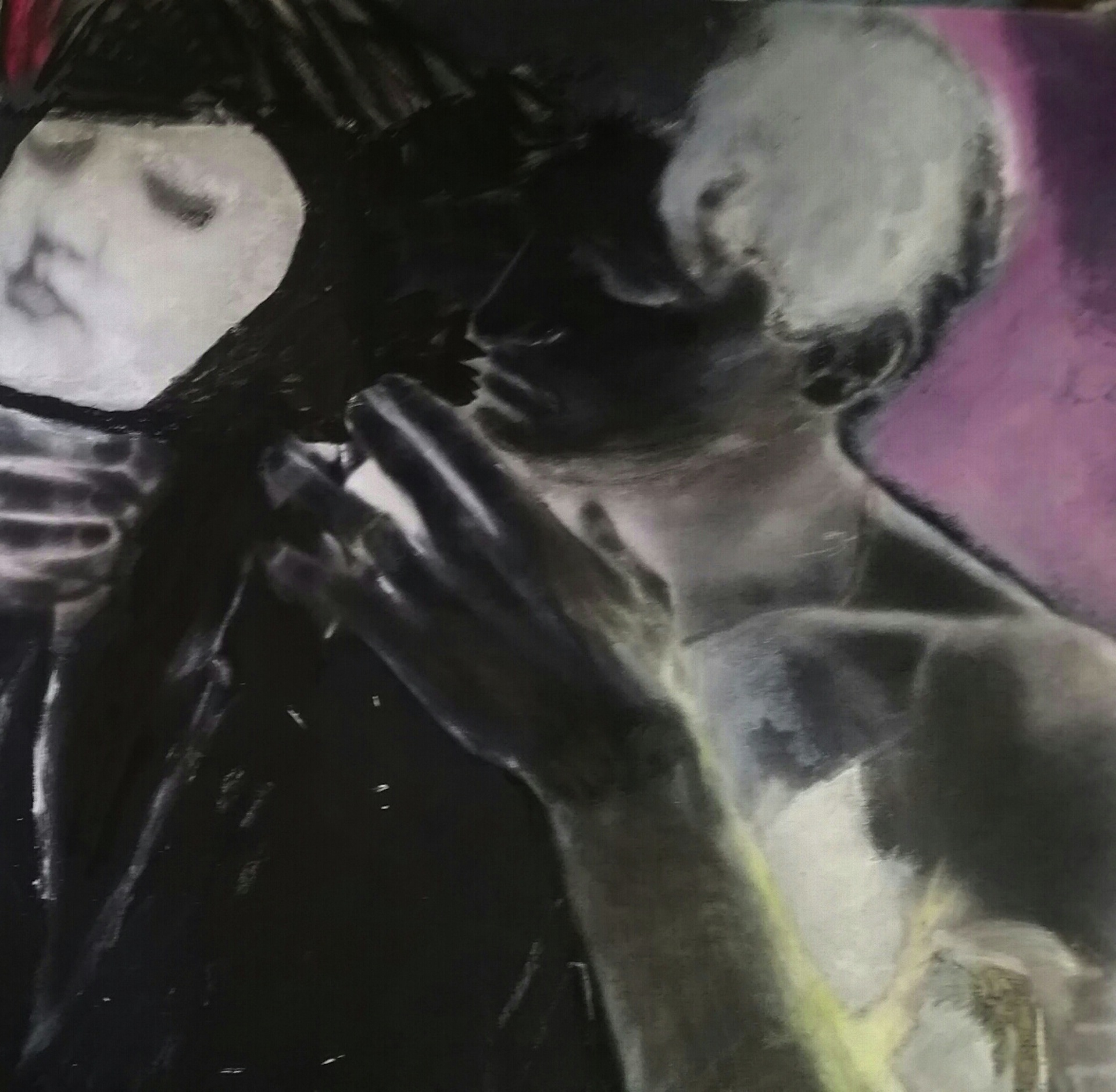
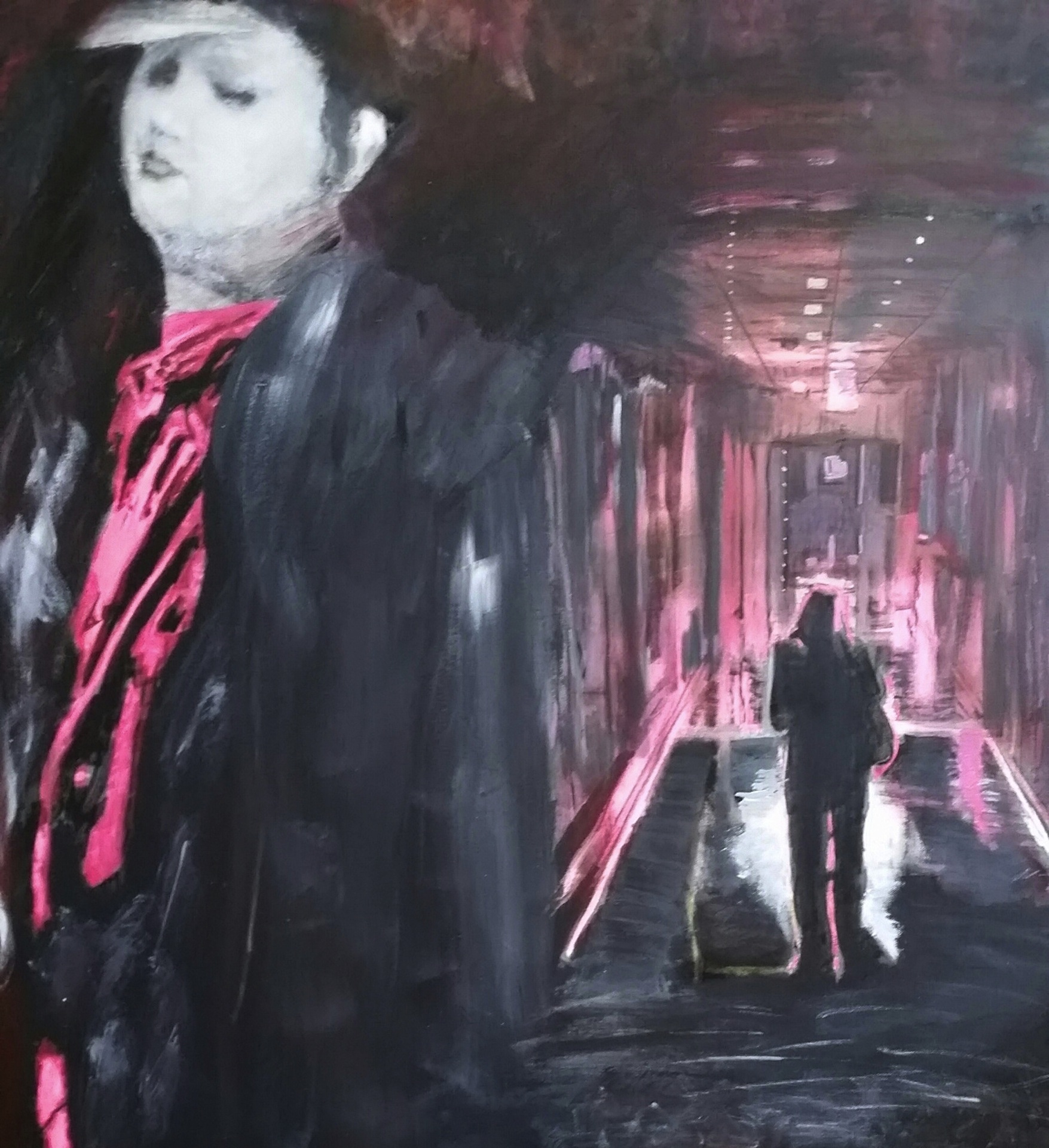
I’ve been working a lot in ink, combined with acrylic and pastel — reworked old paintings, started lots of new ones — ……. and depicting a lot of men.
Studio location: A garage (without the car!) semi-attached to my house. The only natural light is west, which makes for interesting shadows, ideal for my purposes.
How long working here? I moved in early August this year, so the studio hasn’t been mucked up much. I’m still trying to keep it clean and neat. Give it a few months.
THE SPACE
One advantage: I can paint large, larger, largest and cart the canvas out the garage door. Of course, having a new studio feels like a fresh start. I finally have more floor space—my method is to work on the floor, kneeling.
And I have wall space: that’s amazing! The first thing I did when I moved into the new studio, I hung up about 30 of my paintings, it was like seeing them for the first time.
Challenges: Electricity? Yes. But no plumbing: no sink, no toilet. So I do a lot of trudging back and forth.
THE WORK
I tend to work on several paintings at once and revisit old paintings accordingly. And especially now with the fresh new context of the studio, I see everything differently. I’m thinking I want to go toward interior scenes. Figures, of course. But I haven’t done much with objects, and I plan to.
Recommended Reads?
Ross King’s The Judgment of Paris. Immensely detailed, with a sweeping perspective on what King calls “the revolutionary decade that gave the world Impressionism.” King’s starting point is Meissonier, the Andy Warhol of the 19th century (and coincidentally Salvador Dali’s favorite painter). A brilliant illustration of the relativity of the canon.
Another seminal book: Lothar Lang’s Expressionist Book Illustration in Germany, 1907-1927. I’ve pored over that book for years—the drama of the line, the black/ white contrast, the spare use of color as “gesture,” an art of protest. Raw and brutal stuff; those paintings can’t be tamed. The basics for me are content and drama.
And the inimitable Lucy Lippard, the art shaman. I don’t necessarily like the art she likes, but I love looking at art through her eyes. I See/ You Mean is a phenomenal novel.







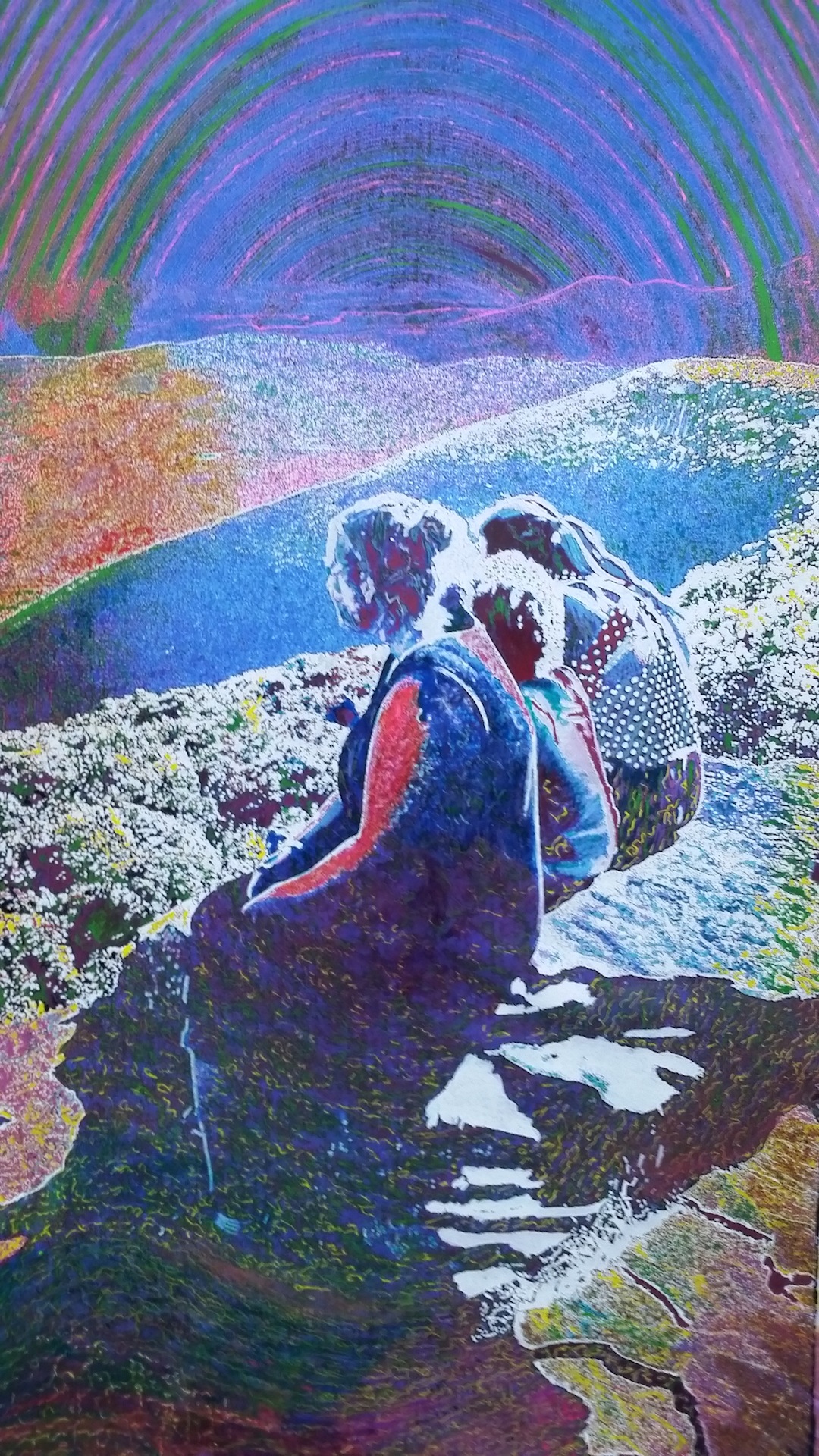
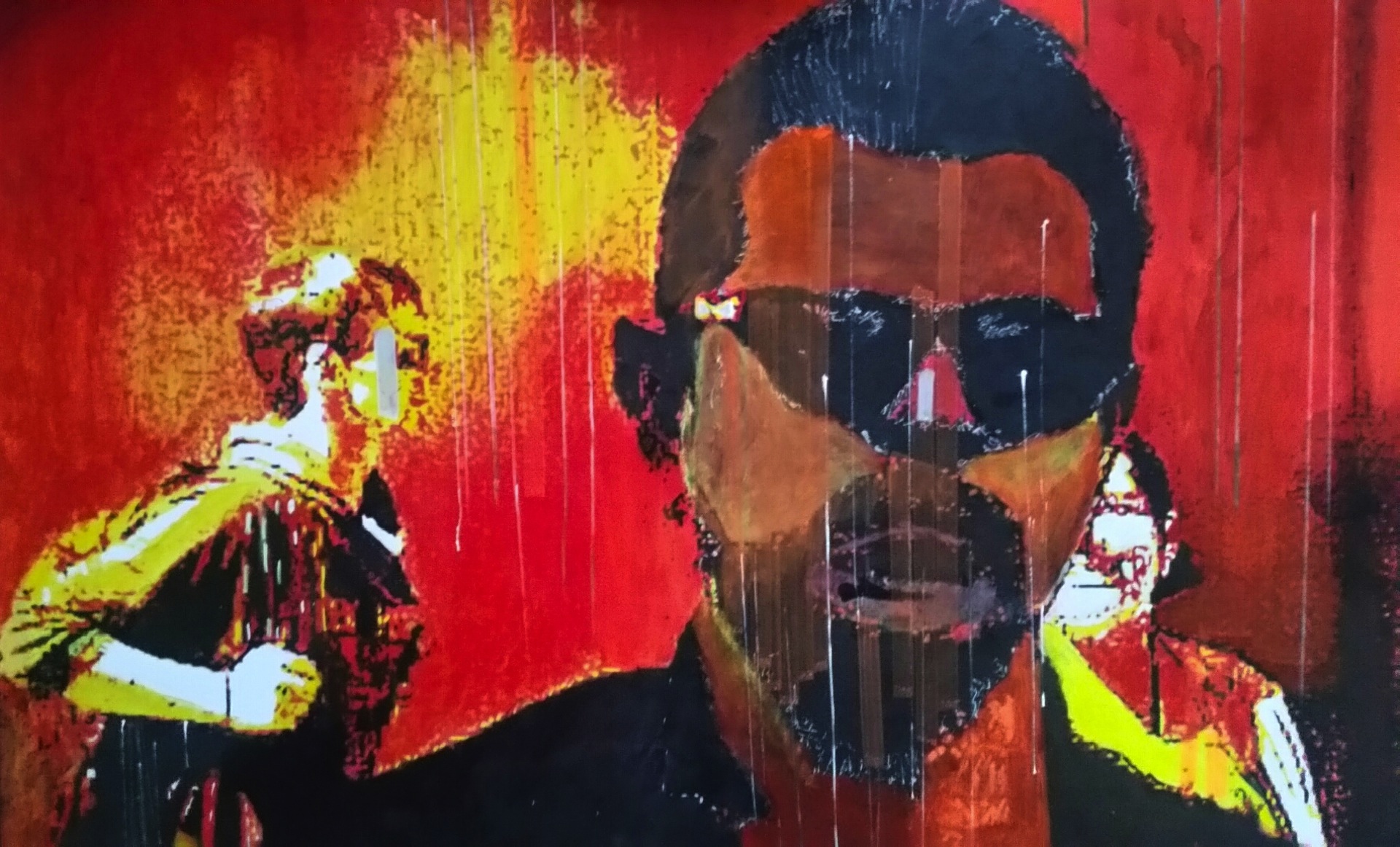
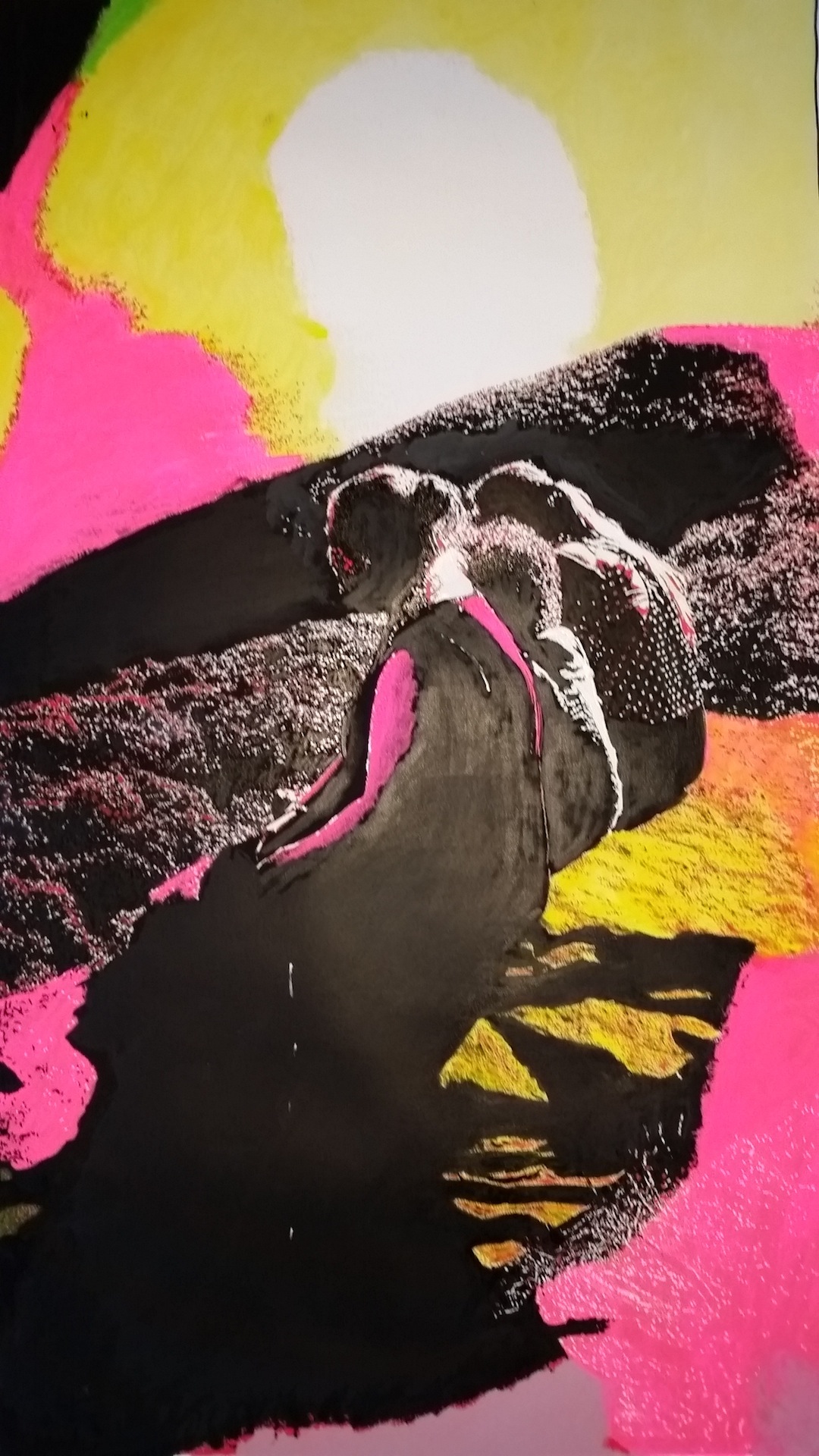
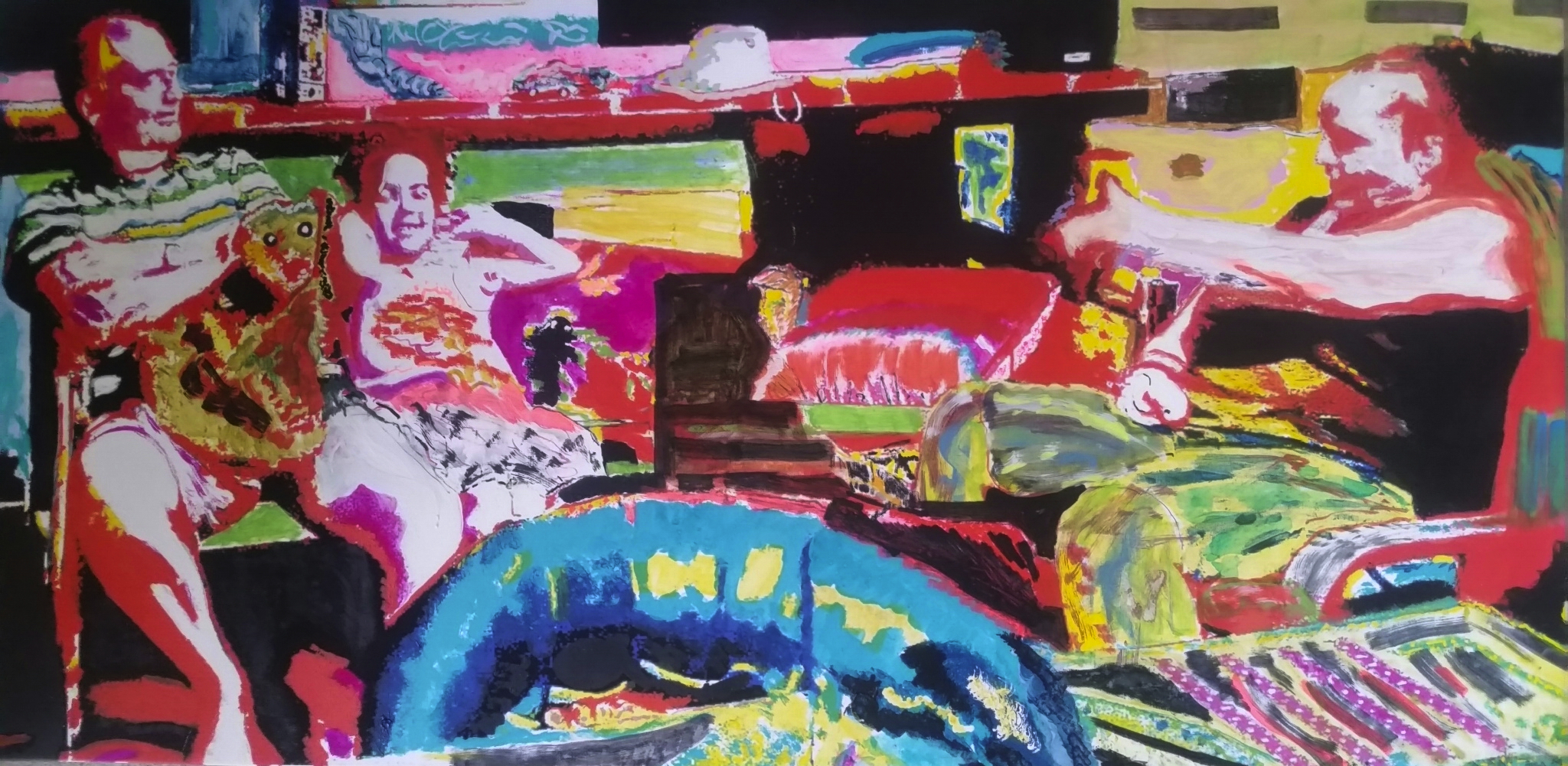
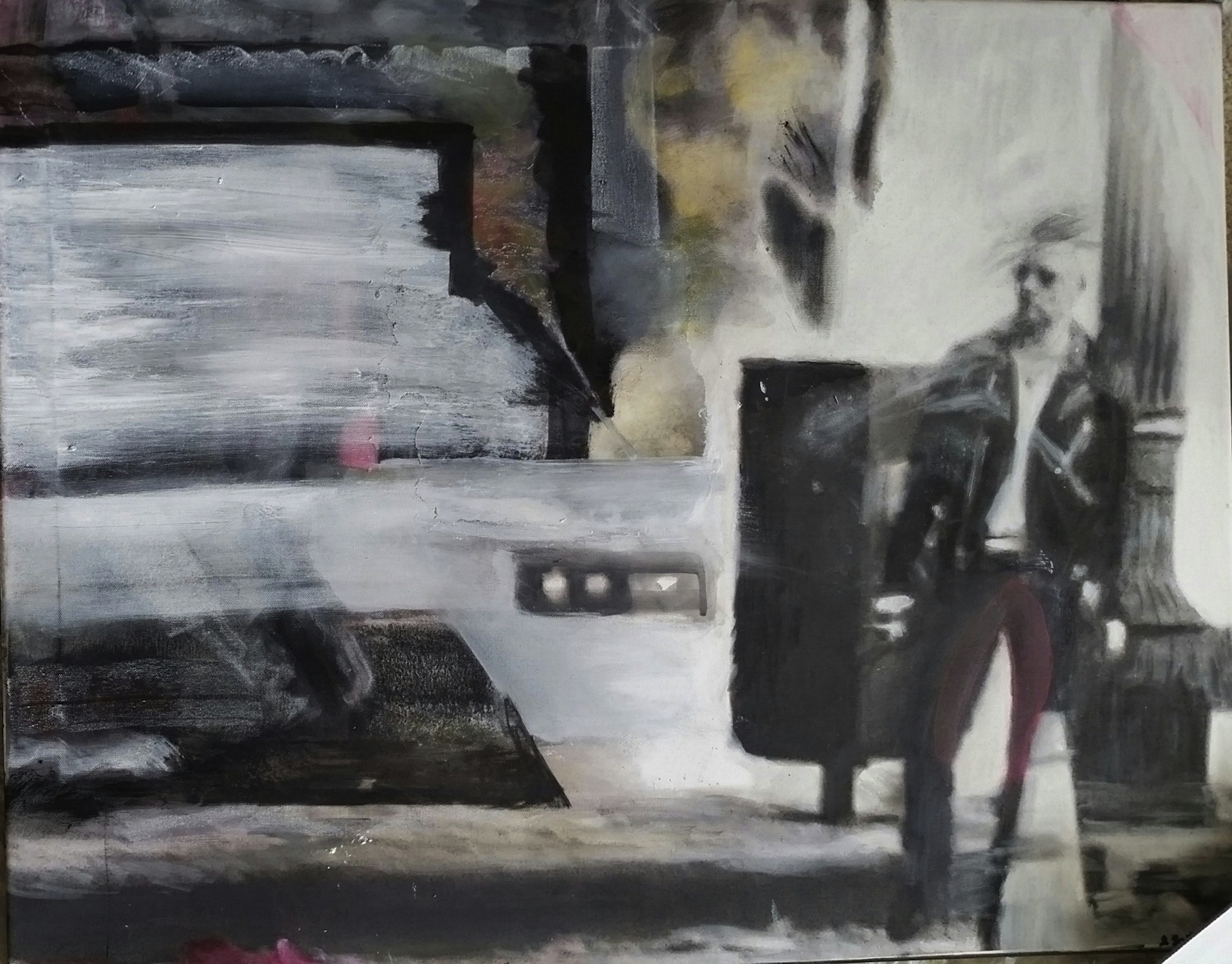
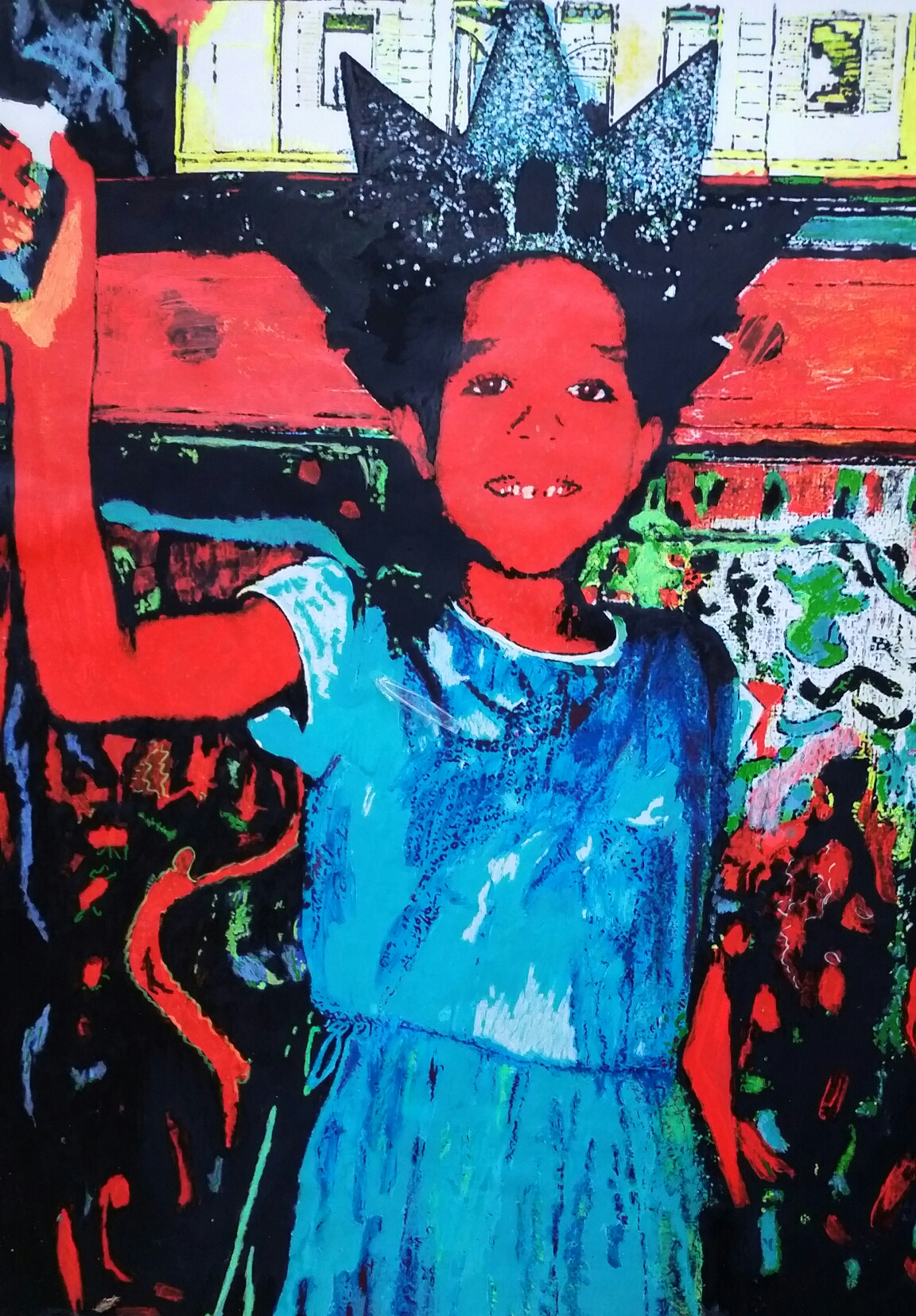
![[[MORE]]STUDIO VISIT: JOSEPHA GUTELIUS
Studio location: A garage (without the car!) semi-attached to my house. The only natural light is west, which makes for interesting shadows, ideal for my purposes.
How long working here? I moved in early August...](https://i0.wp.com/67.media.tumblr.com/4b623bc7adb6b3df203b1bdf5098afb8/tumblr_oflvmrYY1q1vakaauo1_1280.jpg)


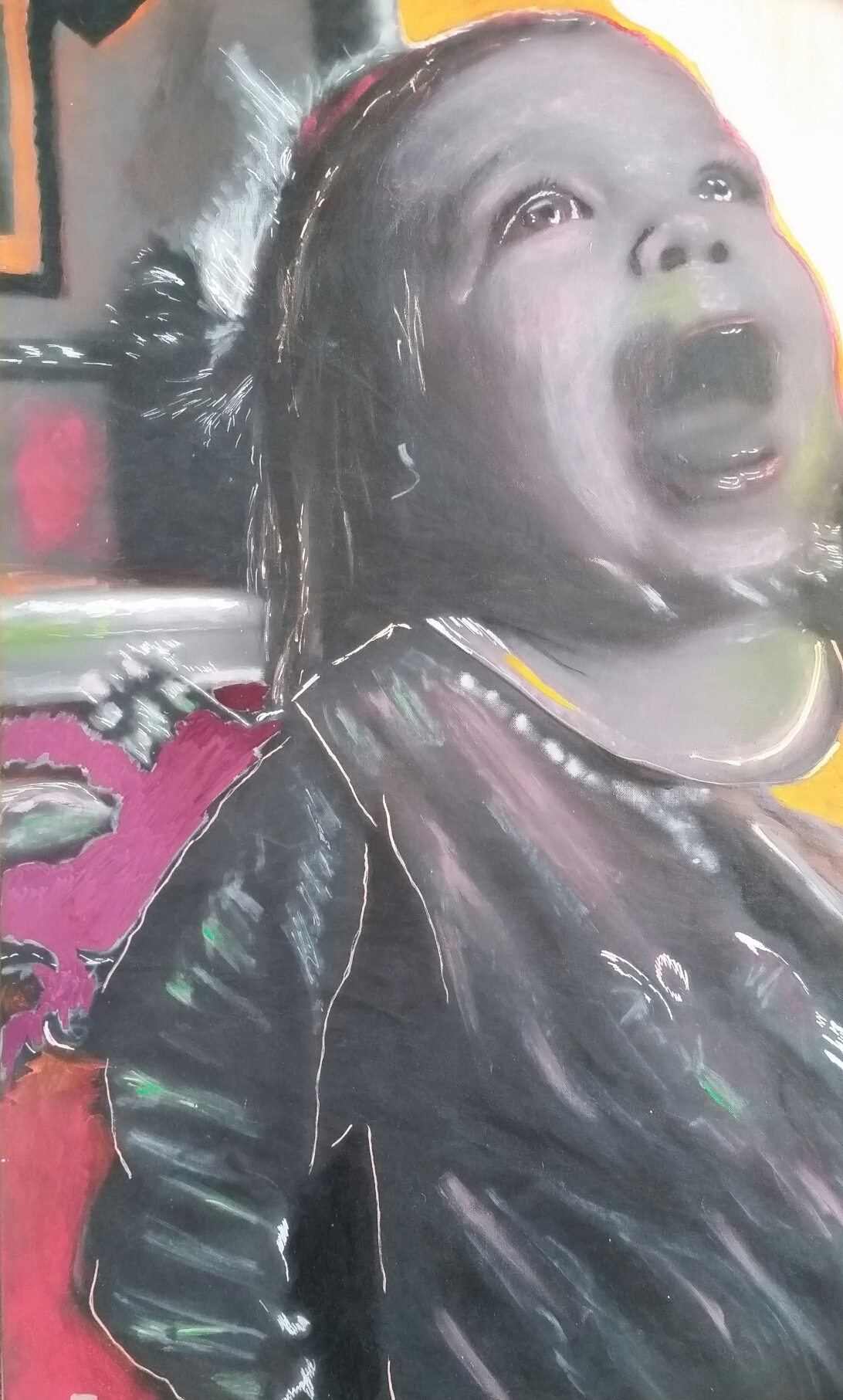
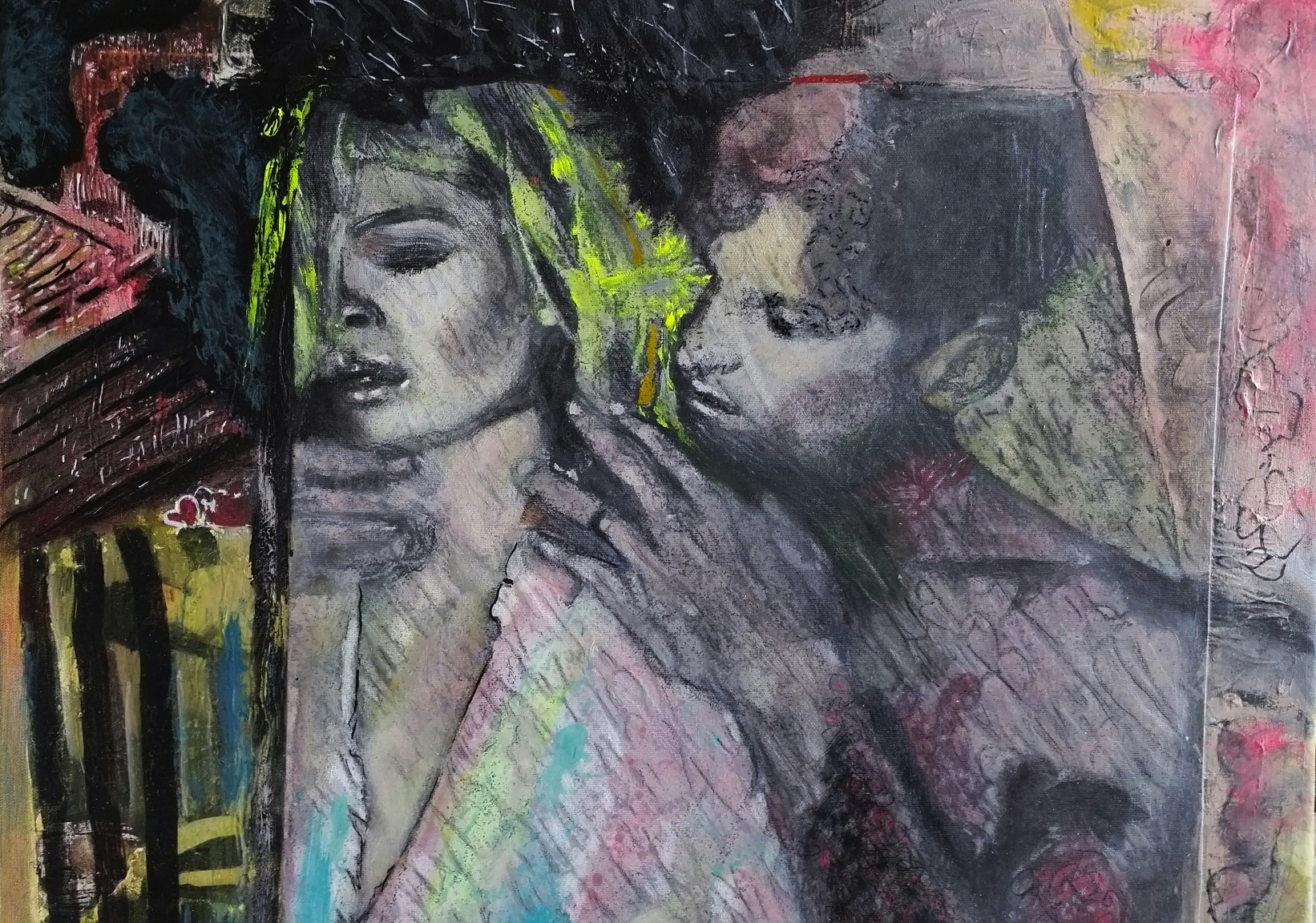








 Josepha Gutelius